
This practical course equips parents, teachers, education professionals, and advocates with the knowledge and skills needed to navigate the special education diagnostic process and effectively support children with disabilities.
Participants will gain a clear understanding of educational needs assessments, Individualised Education Programme (IEP) development, documentation, and collaborative partnerships between families and schools. The course also explores legal rights, effective advocacy, communication strategies, and conflict resolution within special education settings.
Through interactive discussions, case studies, role-play, and practical assignments, participants will develop the confidence to organise educational records, write effective correspondence, develop measurable IEP goals, and advocate for appropriate educational services that promote positive outcomes for children with special educational needs.
By the end of this course, participants will be able to:
Victoria Elder, EdD/PhD, EdS, MA
Educator / Psychologist
Victoria Elder is an experienced educator, psychologist and music educator with over 40 years of experience in education. She has served as a teacher educator, curriculum officer and Curriculum Coordinator within the Ministry of Education, with expertise in psychology, educational development, music education and curriculum design.
She has also taught piano for over 20 years and has extensive experience directing choirs and training educators.
Special Education and Nutrition is an introductory course designed to develop participants’ understanding of the unique nutritional needs of children and adults with special needs, disabilities and neurodivergence. The course combines foundational nutrition principles with practical strategies for meal planning, food safety, weight management and healthy eating across the life course.
Participants will explore how conditions such as autism, ADHD, cerebral palsy and Down syndrome, as well as disabilities associated with stroke, cancer and other non-communicable diseases, can affect nutritional needs and food choices.
The course is suitable for individuals seeking to broaden their knowledge of nutrition and its application to special education and disability support. Participants will develop practical skills in assessing nutritional needs, designing appropriate meal plans and identifying strategies to promote safe, balanced and nutritious eating.
By the end of this course, participants will be able to:
Mrs Shandera Amoy Smith, MSc, BSc, LDN, CCDE, BCDE
Licensed Dietitian/Nutritionist / Ministry of Health and Wellness,
The Bahamas
Shandera Amoy Smith is a Senior Dietitian, Licensed Nutritionist, educator, and wellness entrepreneur with over 20 years of experience in clinical nutrition, public health, and health promotion.
She currently serves with the Ministry of Health and Wellness and lectures at the University of The Bahamas and Southern College. She is the founder of Trinity Wellness Center and is dedicated to advancing community health and nutrition education.
The Complete Songwriting Blueprint is a practical, six-week course designed for aspiring and experienced songwriters across genres who want to develop their songwriting skills and consistently turn creative ideas into complete songs.
Participants will be guided through the songwriting process, from developing an initial concept and writing compelling lyrics to creating memorable melodies, structuring songs, arranging musical ideas and refining finished work.
Through live workshops, hands-on exercises, song analysis, critique sessions and weekly assignments, participants will receive practical techniques and feedback that can be applied to their own creative practice.
The course also introduces co-writing, basic demo development, copyright, royalties and portfolio building, providing participants with a foundation for continued creative and professional development.
By the end of this course, participants will be able to:
Bj’orn Pierre
Recording Artist | Songwriter | Producer
Bj’orn Pierre is a Trinidad and Tobago-based music producer and recording artist with over 10 years of experience in music production and the creative music industry.
Through his work with Ten Strings Music Group, he has produced, released and promoted music for diverse audiences. His practical industry experience equips him to guide aspiring musicians and producers in developing their creative and professional skills.
This course provides a practical introduction to music production and sound engineering for beginners with little or no prior experience. Participants will explore the fundamental principles of sound, audio equipment, recording techniques, and digital audio workstations, alongside essential skills in mixing, mastering, and live sound operation.
Ideal for aspiring producers, musicians, church media teams, and individuals interested in audio technology, the course combines studio-based learning with live sound applications. Emphasis is placed on hands-on practice, workflow development, and safe equipment use.
By the end of the course, participants will have the foundational skills needed to produce audio content and operate basic sound systems in both studio and live environments.
By the end of this course, participants will be able to:
Mr Judah Peters, BFA, Cert. Music Technology
CEO | Redemption Studios by Judah Peters Ltd
Judah Peters is a Music and Audio Production Instructor, multimedia producer, and audio systems consultant with over 15 years of experience in music training, worship leadership, and studio production.
As CEO of Redemption Studios by Judah Peters Ltd, he has produced more than 260 songs and specialises in music production, live sound, livestream audio, and ensemble training.
Judah is recognised for delivering practical, industry-focused instruction grounded in real-world studio and ministry environments.
This foundational course introduces participants to the principles and practices of writing for orchestral instruments. It explores the capabilities, limitations, and expressive qualities of instruments across orchestral families, while examining how they combine to create balance, texture, and tonal colour.
Designed for individuals with intermediate music literacy, the course is ideal for aspiring composers, arrangers, and music educators seeking to deepen their understanding of orchestration.
Participants will engage with both technical and artistic aspects of composition, including score analysis, listening exercises, and practical writing tasks. By the end of the course, learners will be equipped to compose idiomatically for individual instruments and small ensembles, while developing their own creative voice through guided exploration of classical and contemporary works.
By the end of this course, participants will be able to:
Mokale Koapeng, MMus, HDE
Instructor, University of the Southern Caribbean
Mokale Koapeng is a distinguished composer, conductor, music educator, and lecturer with over 40 years of experience in music education, choral composition, conducting, and African music studies.
He currently lectures at the University of the Southern Caribbean and has taught at leading institutions including the University of South Africa and the University of the Witwatersrand. His internationally recognised work spans composition, orchestration, music history, conducting, and music business.
Making Spaces Inclusive for Persons with Special Needs provides a practical introduction to physical, sensory and cognitive accessibility in the built environment.
Designed for designers, planners, facilities personnel, educators and accessibility coordinators, the course explores universal design principles, accessibility standards and practical strategies for creating spaces that promote independence, safety and inclusion.
Participants will examine the needs of people with mobility, visual, auditory, cognitive and age-related needs, while considering the experiences of children and neurodivergent users.
Through case studies, group activities and on-site accessibility audits, participants will evaluate real-world environments, identify barriers and develop practical recommendations for improvement.
The course provides participants with the knowledge and tools to contribute meaningfully to more accessible buildings, campuses and public spaces.
By the end of this course, participants will be able to:
The course in Intelligence Analysis is a 12-week advanced programme designed to equip professionals with the analytical skills and methodologies required to operate effectively in complex security and investigative environments.
Developed in response to evolving global and regional threats, including organised crime, cyber risks, and geopolitical instability, this course provides a structured, practice-oriented approach to intelligence production.
Designed for professionals in law enforcement, national security, corporate security, and financial services, the programme blends academic rigour with real-world application.
Participants will learn to apply the Intelligence Cycle, utilise structured analytic techniques, and produce clear, actionable intelligence to support strategic and operational decision-making.
By the end of this course, participants will be able to:
Mr Brent Clement, MSc
Intelligence Practitioner and Security Analyst
Mr Clement is a Strategic Intelligence Executive and Digital Forensics Expert with nearly 30 years of experience in national security, intelligence analysis, and counterterrorism.
A Certified INTERPOL Instructor and experienced lecturer, he specialises in intelligence fusion, cybercrime investigations, and strategic investigative frameworks.
He has worked extensively with international agencies and is recognised for developing innovative intelligence-led training models that bridge global best practices with regional security needs.
The Professional Development Institute (PDI) was established to enable the University to respond more efficiently and effectively to market demand for professional training. PDI offers professional courses and programmes for early and mid-career professionals, pre-professionals, and those who have an interest in or aptitude for but have not had any formal training in an area.
PDI courses and programmes equip the student with the knowledge, skills, competencies, and attitudes that are relevant and current. They are grounded in the foundations of the discipline, profession, or occupation, but tilt more towards practice than theory, and help the student step seamlessly from the classroom into the workspace.
PDI also designs, develops, and delivers courses and programmes in response to the expressed needs of institutions. These bespoke programmes are tailored to respond to the specific context, aspirations and operations of the client-institution. The Professional Development Institute offers courses organised in three Terms. Each Term runs for twelve to fourteen weeks, as follows: mid-September to mid-December; mid-January to mid-April; and mid-May to mid-August.
The dates for specific courses are indicated on the course flyer below. The course schedules are posted just prior to the start of the course. Courses are conducted on Zoom or face-to-face (residential and non-residential). Payment for each programme must be completed before the course ends, in order to receive the credential. Students may request to go on a payment plan to facilitate their on-time payments.
Successful completion of each course requires students to meet both the attendance and assignment requirements.
Students must complete:
This means that students are expected to participate consistently in lectures, activities, discussions, and course assignments throughout the course. Students who do not meet the minimum attendance or assignment requirements may not be considered eligible for successful completion of the course or certification.
Grading Options: Pass/Fail or Letter Grade
Students have an individual choice between two grading options:
Students are required to indicate their preferred grading option by the stated deadline communicated during orientation.
Understanding the Pass/Fail Option
Under the Pass/Fail system:
To receive a Pass, students must:
Understanding the Letter Grade Option
Students who choose the Letter Grade option will receive a formal academic grade based on their performance in course assignments and assessments.
The final letter grade is determined by:
The course instructor is responsible for:
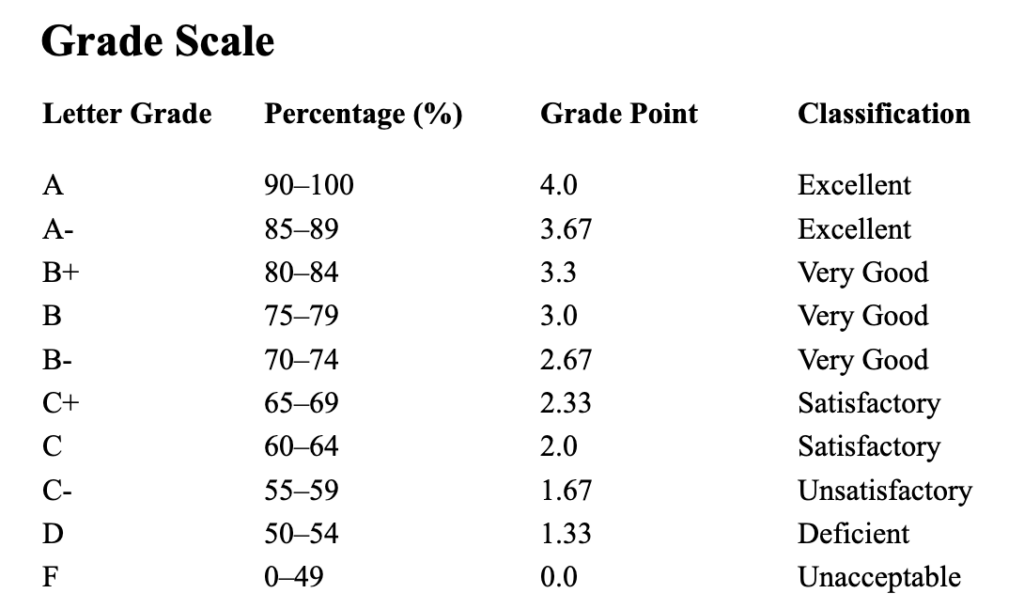
Students demonstrate:
Students demonstrate:
Students demonstrate:
Students demonstrate:
Students demonstrate:
Students demonstrate:
Please write to the instructor, cc pdi@usc.edu, for clarification on any aspects of the course content, methodology and assessment.
PDI manages the record-keeping and issuance of certificates. Please write to pdi@usc.edu.tt for any additional information and/or clarification.
Yes. A certificate course is a short-term, specialised programme designed to teach specific skills or provide expertise in a particular area. USC is 99 years old, and is the 3rd largest and 3rd highest ranked university in Trinidad and Tobago.
No, there is no registration fee for PDI courses.
No, there is no certificate fee.
No, there is no mailing fee. On successful completion of the course, PDI will ask you to reconfirm your full mailing address and your certificate will be mailed to you.
Yes, there are payment options based on the duration of the course. PDI will send you the payment options via email or whatsapp.
There are three methods:
There are four delivery methods, viz:
Most PDI courses do not have formal prerequisites. However, some advanced or specialised courses may recommend prior experience or foundational knowledge. Specific requirements, if any, will be listed in the course description.
Tel: 1-868-662-2241 , 1-868-612-4872 Ext 1051
WhatsApp: 1-868-471-7272
E-mail: pdi@usc.edu.tt