
The University of the Southern Caribbean (USC) is strengthening its role as a regional center for mission education, intercultural engagement, and leadership development, building on nearly a century of preparing men and women for service throughout the Caribbean and beyond.
Recent developments surrounding the Intercultural Mission and Church Planting Summit and the establishment of the Global Mission Institute have highlighted the University’s expanding influence within the Seventh-day Adventist Church and its growing contribution to global mission initiatives.
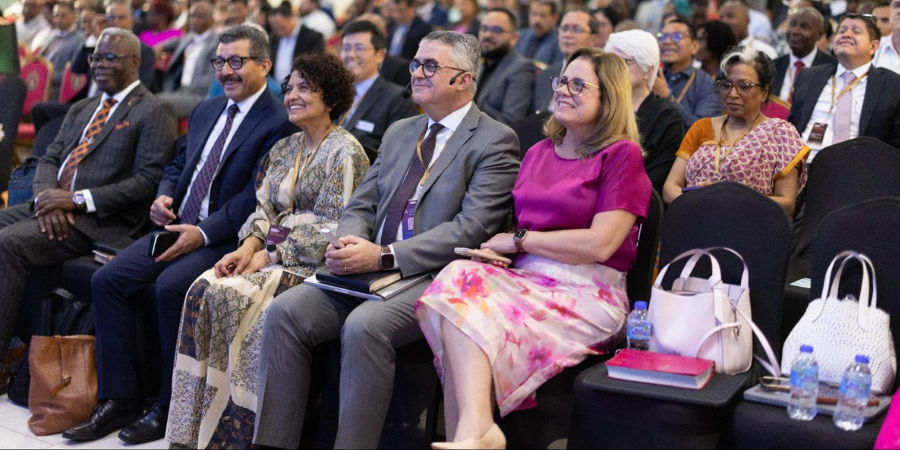
By hosting the inaugural Intercultural Mission and Church Planting Summit from May 27-30, 2026, USC brought together world church leaders, mission specialists, educators, pastors, students, and delegates from across the globe for dialogue and training focused on mission in multicultural contexts. The event was the first of its kind within the Inter-American Division and demonstrated USC’s capacity to convene international leaders around issues shaping the future of the church.
The summit also served as the setting for a major institutional milestone: the signing of a Memorandum of Understanding establishing the Global Mission Institute. The Institute is designed to strengthen mission training, leadership development, church planting, and intercultural ministry throughout the region and beyond.
For USC, the Institute represents more than a new program. It positions the University as a strategic partner in supporting the church’s mission priorities while expanding opportunities for students, church leaders, and mission practitioners to receive specialized preparation for service in diverse cultural and religious environments.
USC President Dr. Colwick Wilson reflected on the institution’s journey from its humble beginnings in 1927, when a small group of students and faculty occupied a single building, to its current role serving thousands of students across undergraduate and graduate programs. Today, USC offers 29 undergraduate programs, eight graduate programs, and an English as a Second Language program serving international students from non-English-speaking backgrounds.
That international reach has become increasingly important as the University responds to the realities of a globally connected church and society. The ability to engage effectively across cultures, languages, and worldviews is now central to both higher education and mission preparation, and USC is positioning itself to meet that need through scholarship, training, and collaborative partnerships.
These developments align closely with USC’s Strategic Plan 100 (SP100), which emphasizes spiritual vitality, transformational learning, global engagement, innovation, and expanded community impact. As the University approaches its centennial celebration in 2027, leaders see the recent summit and the launch of the Global Mission Institute as concrete expressions of the institution’s long-term vision.
The University is not only celebrating its history but also defining its role for the future: preparing servant leaders who can navigate complex cultural contexts, build meaningful partnerships, and contribute to mission-driven work across the Caribbean and around the world.
Church leaders participating in the summit repeatedly pointed to the need for institutions that can combine academic excellence with practical mission training. USC’s growing partnerships with the Caribbean Union Conference, the Inter-American Division, Adventist Mission, and the General Conference suggest increasing confidence in the University’s ability to fulfill that role.
As mission challenges become more global, urban, digital, and multicultural, USC is positioning itself at the intersection of education and service. Through initiatives such as the Global Mission Institute and international mission engagement, the University is expanding its influence beyond traditional academic boundaries and strengthening its identity as a center for intercultural leadership and mission preparation.
Nearly 100 years after its founding, USC continues to evolve in response to the needs of the church and society. The recent summit did more than gather international delegates on campus; it signaled a broader shift in how the University is contributing to mission, scholarship, and leadership development in the region and beyond.