
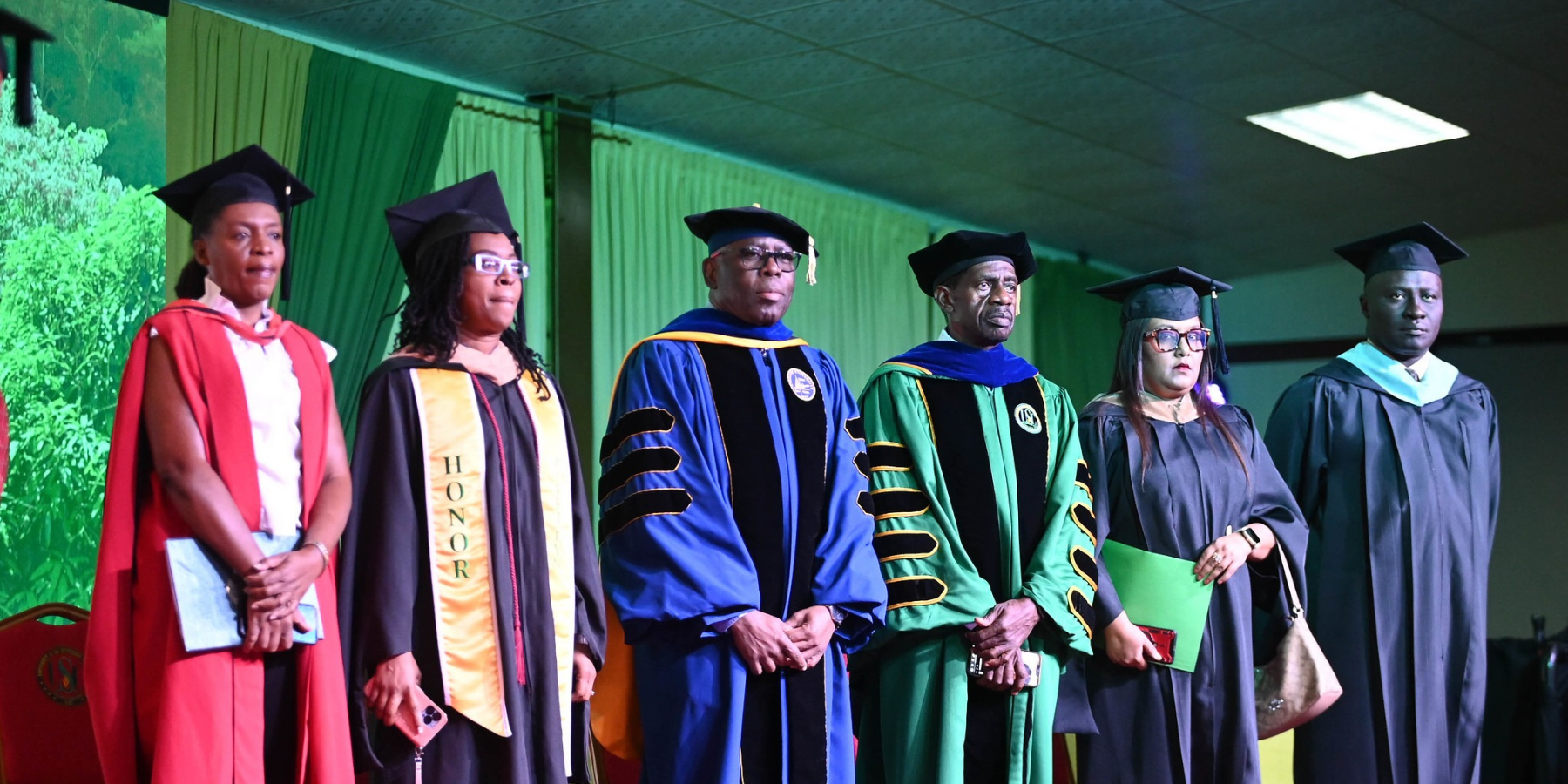
The University of the Southern Caribbean (USC) marked the ceremonial opening of its centennial academic year on Monday, September 28, 2026, with a President’s Convocation that introduced new academic leadership, launched the Dress for Success initiative and celebrated the arrival of the institution’s 100th intake of new students.
Held at the USC Auditorium under the theme “Standing on Legacy, Stepping into Promise,” the ceremony featured the first official addresses by newly appointed Provost Professor Stephen Joseph and Dean of the School of Social Sciences Dr. Glenda Hinkson. The occasion carried particular significance as USC entered the final year before its centennial anniversary on August 27, 2027.
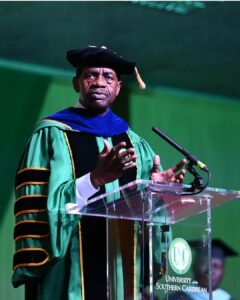
In his convocation address, University President Professor Colwick M. Wilson traced USC’s development from its beginnings at the La Realista Estate in Maracas Valley in 1927 to an accredited university offering more than 40 programmes of study.
Reflecting on the institution’s earliest years, when its first cohort comprised 25 men and eight women from British Guiana, Barbados, Tobago and northern Trinidad, Professor Wilson reminded the gathering that USC’s growth had been sustained by a commitment to Christian education and service.
“Institutions of consequence do not always begin with abundance. Often, they begin with a clear mission, courageous leadership and people willing to work faithfully with what they have,” he observed.
That founding vision has since produced more than 30,000 alumni serving in diverse professions across the Caribbean and internationally. The University also marks 20 years since attaining university status in 2006, alongside the twentieth anniversaries of its nursing programme and Portraits of Excellence Scholarship Programme.
Professor Wilson drew particular attention to the University’s 100th entering class, comprising 622 new students from 18 countries, a considerable expansion from the 33 students who formed its first cohort.
Turning to the convocation theme, drawn from Joshua 1:1–9, he challenged the University community to regard its history as a foundation for continued development rather than an achievement upon which to rest.
“Legacy is a foundation, not a resting place,” he declared.
For Professor Wilson, entering USC’s second century will require renewed attention to academic excellence, the student experience, research, innovation and the University’s contribution to Caribbean society.
“The Centennial does not simply close USC’s first century; it opens the door to our second,” he affirmed.
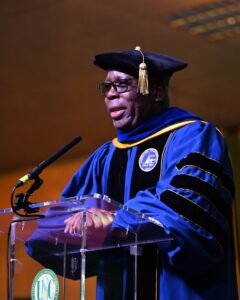
Among the ceremony’s notable moments was the formal introduction of Professor Stephen Joseph as USC’s new Provost, effective September 17, 2026. His appointment marks a return to the institution where he served as Lecturer and Chair of the Department of History and Social Studies from 1990 to 2005.
Addressing the University community for the first time in his new role, Professor Joseph opened with an unexpected admission. Just weeks earlier, he had been happily retired, enjoying the freedom of an unscheduled life and enthusiastically telling friends about its benefits. Then he met Professor Wilson.
Their conversations about the President’s vision for USC prompted him to reconsider retirement and accept the opportunity to return.
“And now I have to say that I’m very excited to be here at USC,” he told the gathering, thanking the University community for its warm welcome.
Professor Joseph brings more than 40 years of experience in education and academic administration. Most recently, he held several senior positions at the University of Trinidad and Tobago, including Acting President and Vice President for Research, Academic and Student Affairs.
Although familiar with USC, he acknowledged how much the institution had developed during his absence.
“I know that the institution has changed tremendously since I was here in 1990 to 2005. Things have changed, you have grown,” he observed.
Rather than outlining an immediate programme of changes, Professor Joseph emphasised his intention to listen. He had begun meeting with stakeholders to understand USC’s distinctive strengths, challenges and operational gaps, with further consultations planned.
“I really would like to be part of this growth process to see USC operate at its fullest potential,” he said.
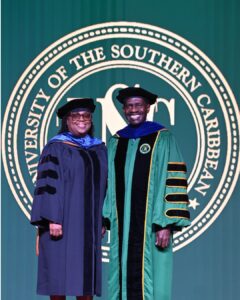
The ceremony also formally introduced Dr. Glenda Hinkson, the new Dean of the School of Social Sciences, who addressed the University community for the first time in her new capacity. Her introduction, alongside that of Professor Joseph, marked an important development in USC’s academic leadership as the institution begins its centennial year.
President’s Convocation also provided the setting for the official launch of Dress for Success, an initiative promoting professional presentation and workplace readiness among USC students.
The launch featured six students, three men and three women, modelling professional attire as part of the presentation.
The initiative extends the University’s emphasis on student development beyond academic preparation, encouraging students to consider how personal presentation contributes to their professional identity and readiness for employment.
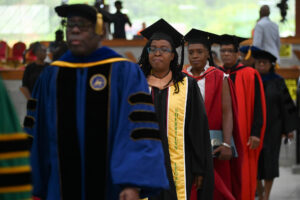
The convocation retained the ceremonial traditions of the academic year, including the participation of faculty and administrators in academic regalia, musical selections by USC’s Concert Band and Jazz Band, prayers, and greetings from academic leaders.
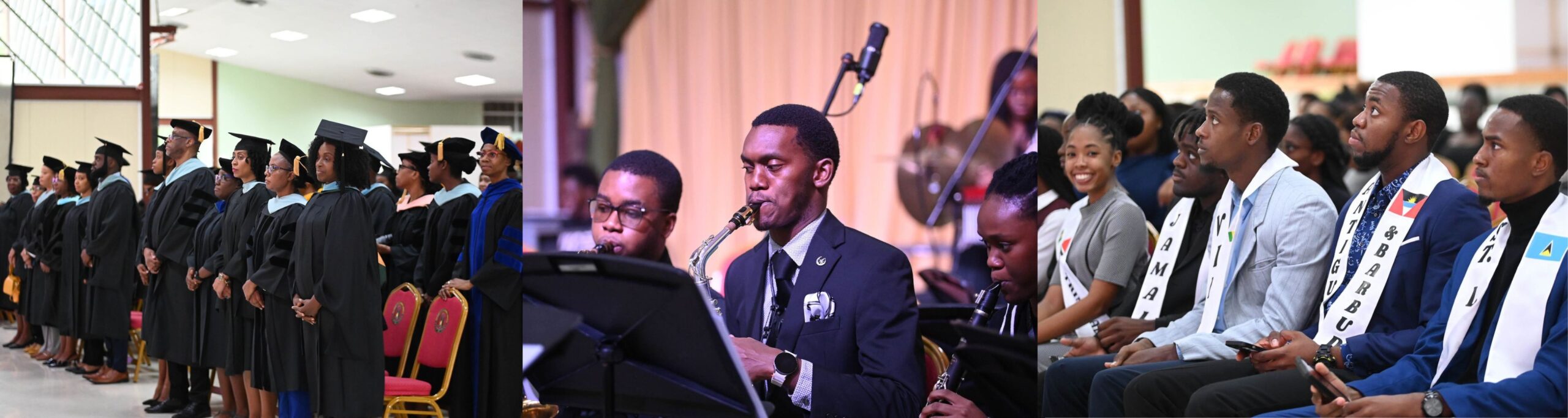
The gathering also recognised delegates of the 2027 Portraits of Excellence Scholarship Programme, highlighting opportunities for student leadership and development.
As USC advances toward August 27, 2027, President’s Convocation 2026 stands as a significant marker in its centennial journey, observed under the theme “Journey to 100: Excellence in Motion.”
With its 100th intake beginning their studies, new academic leaders assuming office and initiatives supporting student development taking shape, the University has entered its centennial academic year with renewed attention to the responsibilities and opportunities that accompany a century of educational service.