
For seven Mondays between May 25 and July 6, 2026, the Occupational Therapy Department at the University of the Southern Caribbean (USC) welcomed children and adults to its Student-Run Clinic, where they received free services to support their independence in everyday life. From hand therapy to sensory integration activities and adaptive equipment support, the initiative addressed a range of functional needs while providing graduate students with supervised clinical experience.
The clinic was among the achievements recorded by USC’s School of Science, Technology and Allied Health (SSTAH) during July–September 2026, a period also marked by nursing research focused on healthcare workforce development and disaster preparedness.
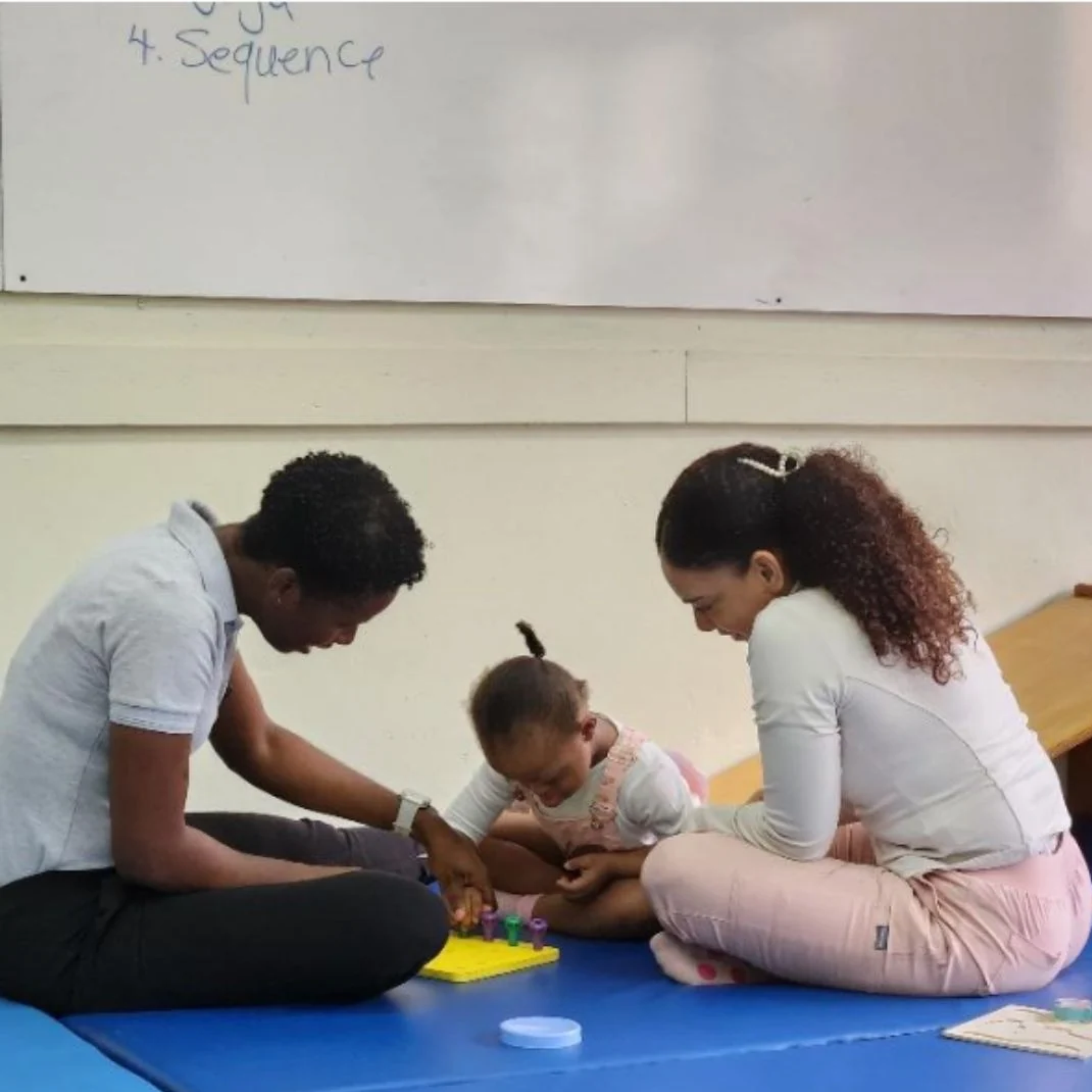
Operating from the Occupational Therapy Department, located downstairs in USC’s Reference Library, the clinic brought students into direct contact with clients whose needs required thoughtful assessment and practical therapeutic interventions. Under the supervision of registered occupational therapists, students applied their academic knowledge in a clinical setting, gaining experience with the individual circumstances and challenges that shape patient care.
The initiative also extended the University’s service to the surrounding community, making occupational therapy support accessible at no cost.
Beyond the clinic, USC’s Master of Science in Occupational Therapy programme celebrated an important milestone. Established in 2016, the programme operated three cohorts simultaneously for the first time in its history, with a combined enrolment of 29 students.
The commencement of the new academic year welcomed Cohort 8, comprising six students. Ten years after its establishment, the programme’s continued development reflects USC’s investment in preparing occupational therapy professionals equipped to meet the rehabilitation and functional needs of the communities they serve.
Faculty members in USC’s Department of Nursing Education collaborated with Dr. Catherine Cox, a Fulbright Scholar from George Washington University, and Adrian Palmer of The University of Trinidad and Tobago on a study titled “Reframing Nursing Workforce Preparation for Sustainable Health Systems in the Caribbean: A Mixed-Methods Study from Trinidad and Tobago.”
The study examines how nursing workforce preparation can contribute to the long-term sustainability of Caribbean healthcare systems, an issue with implications for the region’s capacity to meet evolving healthcare demands.
An abstract of the research was presented as a poster at Forecast August 2026: Science and Innovation for a Sustainable Caribbean and subsequently accepted for full publication in the Caribbean Journal of Science. These developments represent important steps in bringing the findings of collaborative research conducted in Trinidad and Tobago to a wider academic audience.
Another research initiative focused on simulation-based disaster training for Bachelor of Science in Nursing students in Trinidad and Tobago.
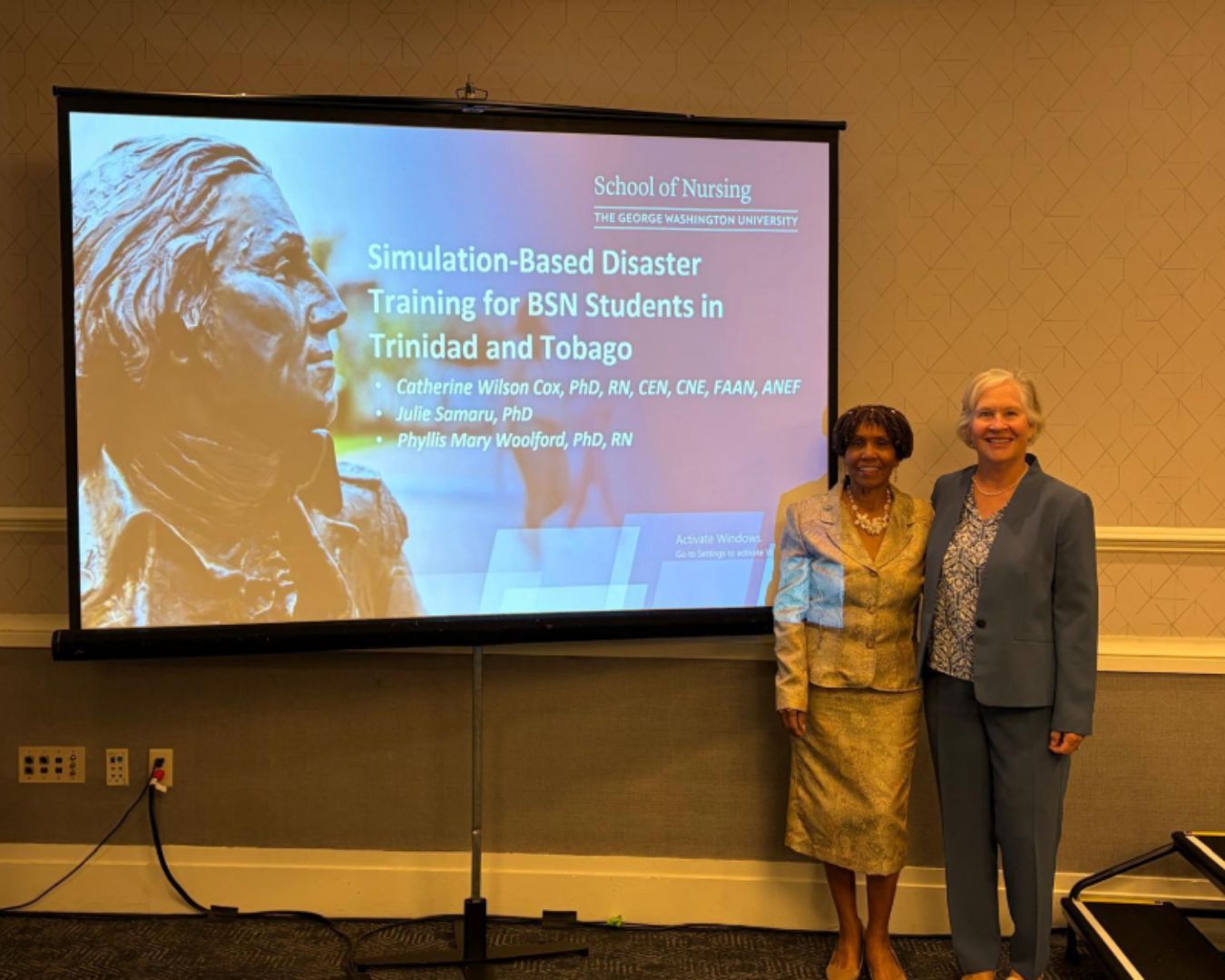
The paper, authored by Dr. Julie Samaru, an adjunct faculty member in USC’s Department of Nursing Education, alongside Dr. Catherine Cox and Dr. Phyllis Woolford, was presented by Dr. Samaru and Dr. Cox at George Washington University.
For Caribbean healthcare professionals, disaster preparedness carries particular urgency. Severe weather events and other emergencies can disrupt essential services, requiring nurses to make critical decisions under demanding circumstances. Simulation-based training offers students opportunities to practise responding to such situations within controlled educational environments, where clinical judgement and emergency response skills can be developed before they are needed in practice.
The presentation brought a Caribbean perspective on disaster preparedness in nursing education to an international academic forum.
As USC approaches its centennial in 2027, the School’s achievements illustrate the practical value of its work in healthcare education. Whether through supervised occupational therapy services or research examining the preparation of future nurses, its faculty and students are addressing needs that extend well beyond the University’s campus.