
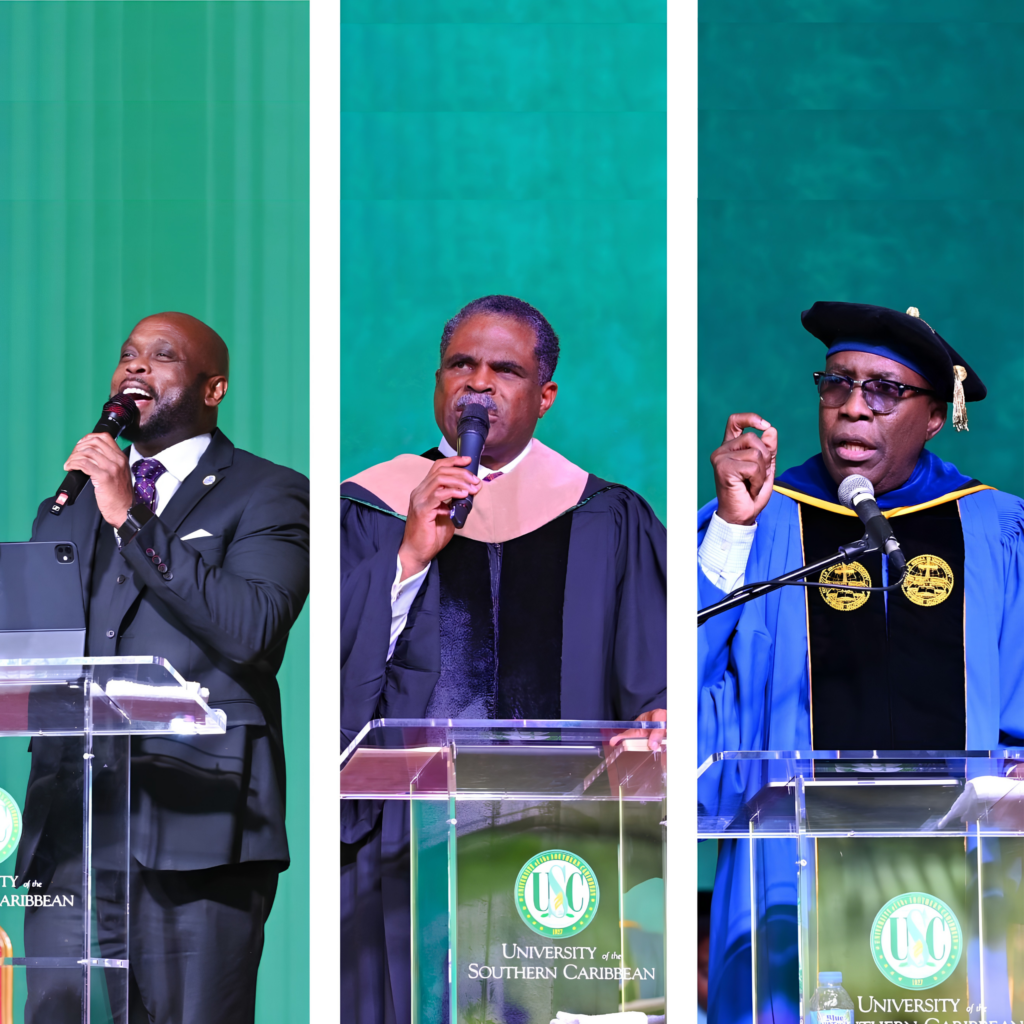
Graduation speakers are often remembered for a memorable quotation, a timely piece of advice, or an inspiring story. Yet the most effective addresses frame a generation’s understanding of what comes next.
At the University of the Southern Caribbean’s 93rd Graduation Weekend, three voices shaped by faith, leadership, and service stood before the Class of 2026 at three pivotal moments—consecration, baccalaureate, and commencement. Their backgrounds differed. Their journeys were unique. Their messages emerged from different biblical narratives and life experiences.
Yet together, Dr. David McKenzie, Dr. Paul Douglas, and Dr. Christon Arthur delivered a remarkably unified challenge. The degree, they suggested, is not the destination. It is the beginning of a responsibility.
Dr. David McKenzie – Consecration Speaker
“The same God who showed up for you in your academic journey, in your season of preparation, will show up for you in your season of execution.”
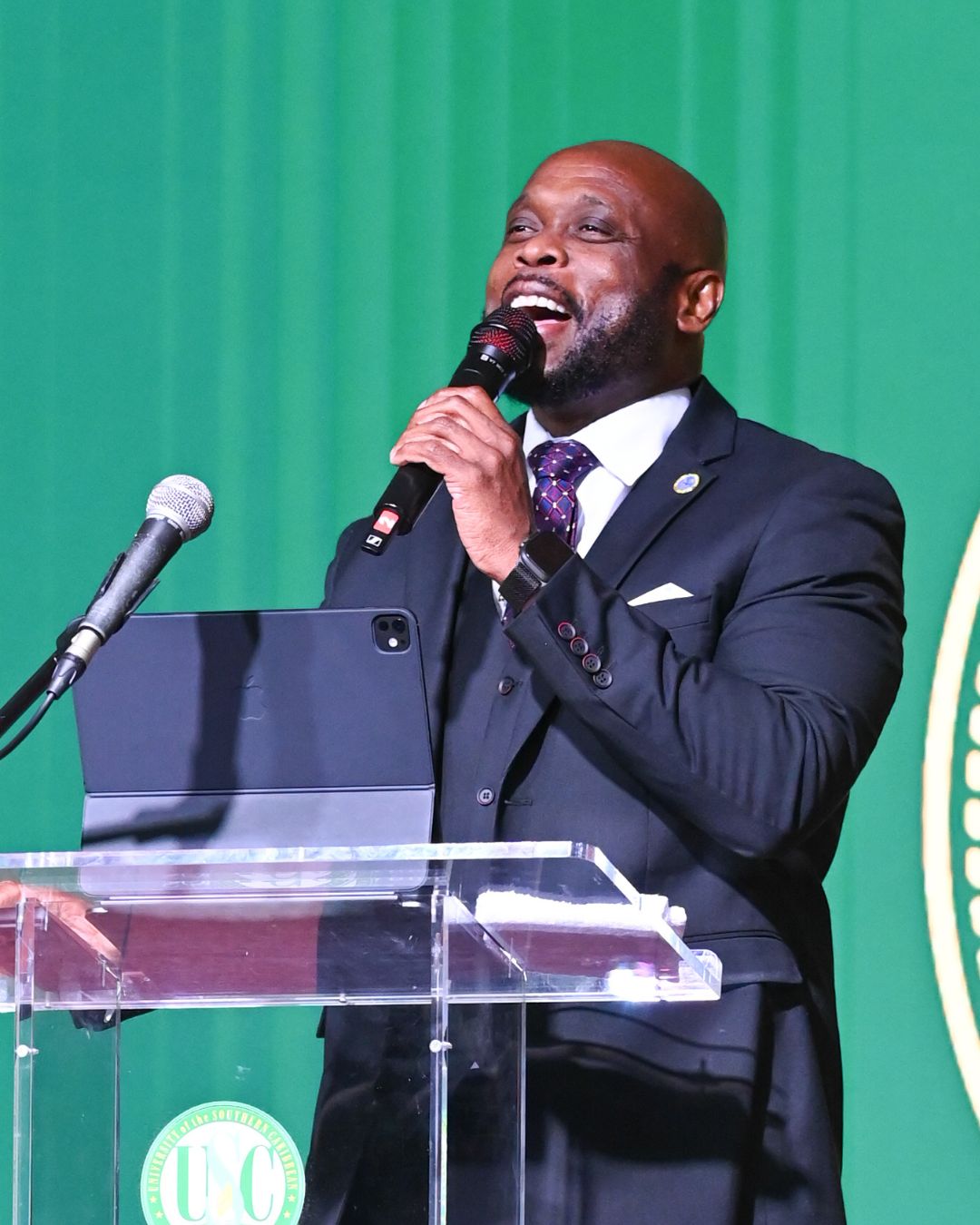 For Dr. David McKenzie, Executive Secretary and Assistant to the President for Mission and Evangelism of the Atlantic Union Conference and a graduate of Caribbean Union College’s Class of 2001, that responsibility begins with trust.
Returning to the campus where he once swept roads, cleaned classrooms, and struggled through financial hardship as a student, McKenzie offered graduates a deeply personal testimony. He spoke candidly about sleeping in an abandoned house during one difficult season of his university years and relying on the kindness of friends to make it through. Looking back, he reminded graduates that neither hardship nor uncertainty has the final word when God remains at the center of one’s journey.
His message, distilled into a simple declaration—“God will show up”—challenged graduates to recognize that success is not measured by the absence of obstacles. Every dream, he argued, will encounter its own Jericho. Every calling will face resistance. The question is not whether challenges will come, but whether graduates will remain connected to the Source of their strength when they do.
In many ways, McKenzie’s message was an invitation to resilience. Dr. Paul Douglas offered a complementary perspective.
Dr. Paul H. Douglas – Baccalaureate Speaker
“Do not spend your energy worrying about tomorrow when God is calling you to prepare today.”
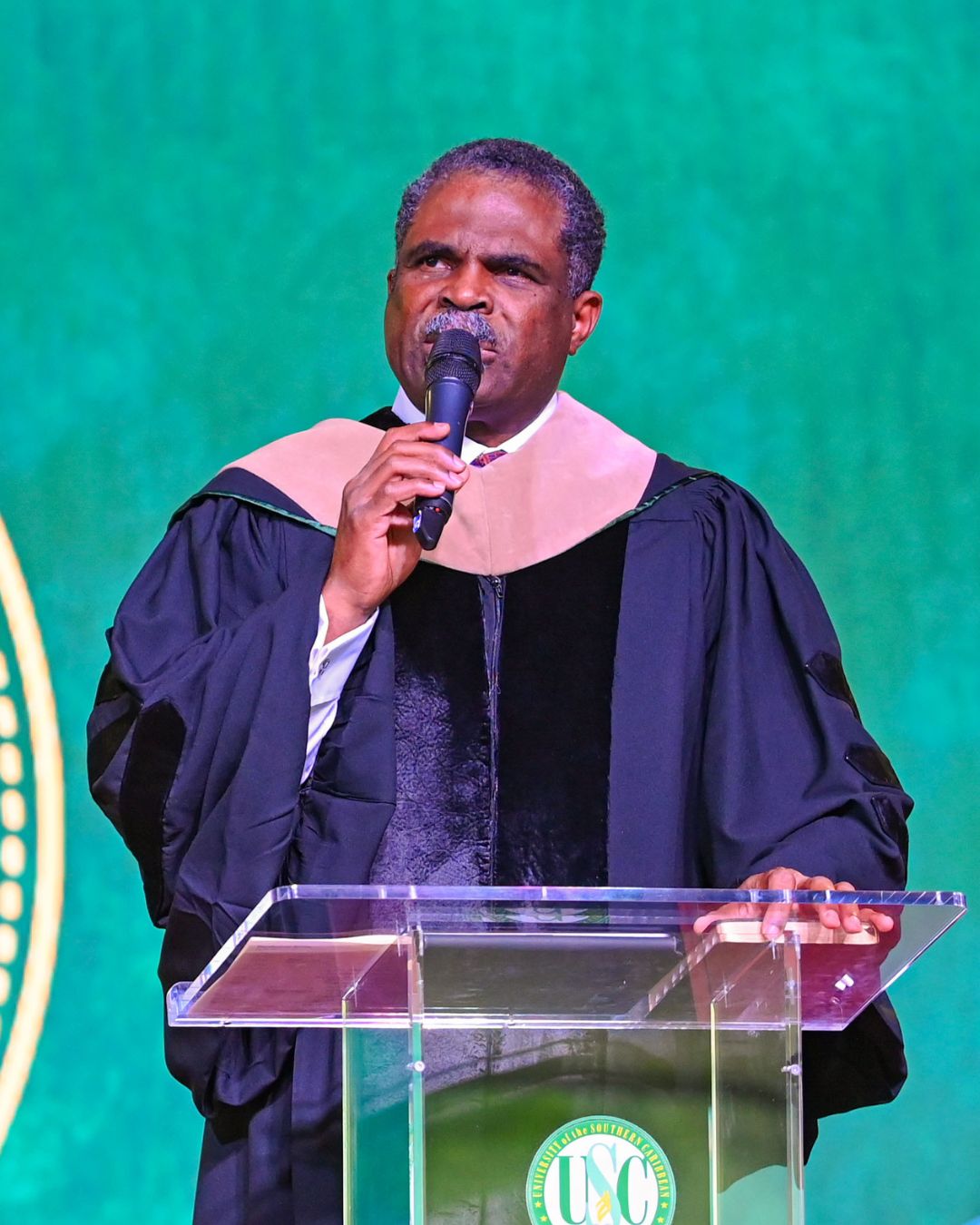
As Treasurer and Chief Financial Officer of the General Conference of Seventh-day Adventists, Dr. Paul H. Douglas occupies one of the most influential leadership roles within the worldwide church. Yet his message to graduates focused less on achievement and more on preparation. Drawing from Joshua’s encounter with the Jordan River, he reminded listeners that life’s most significant opportunities often arrive alongside uncertainty.
Standing at the edge of the Promised Land, Israel faced a river at flood stage. For Douglas, the image served as a powerful metaphor for the graduating class. Degrees had been earned. Celebrations were underway. Yet beyond commencement lay unanswered questions about careers, finances, relationships, purpose, and calling.
His counsel was both practical and profound: stop worrying about tomorrow and prepare for it instead.
The future, he suggested, does not belong to those who possess perfect clarity. It belongs to those who trust God’s leading even when the path ahead remains partially obscured.
Where McKenzie emphasized perseverance, Douglas emphasized faith. Then came the final challenge.
Dr. Christon Arthur – Commencement Speaker
“Don’t live your life trying to get ready. Live your life being available to what God is calling you to do.”
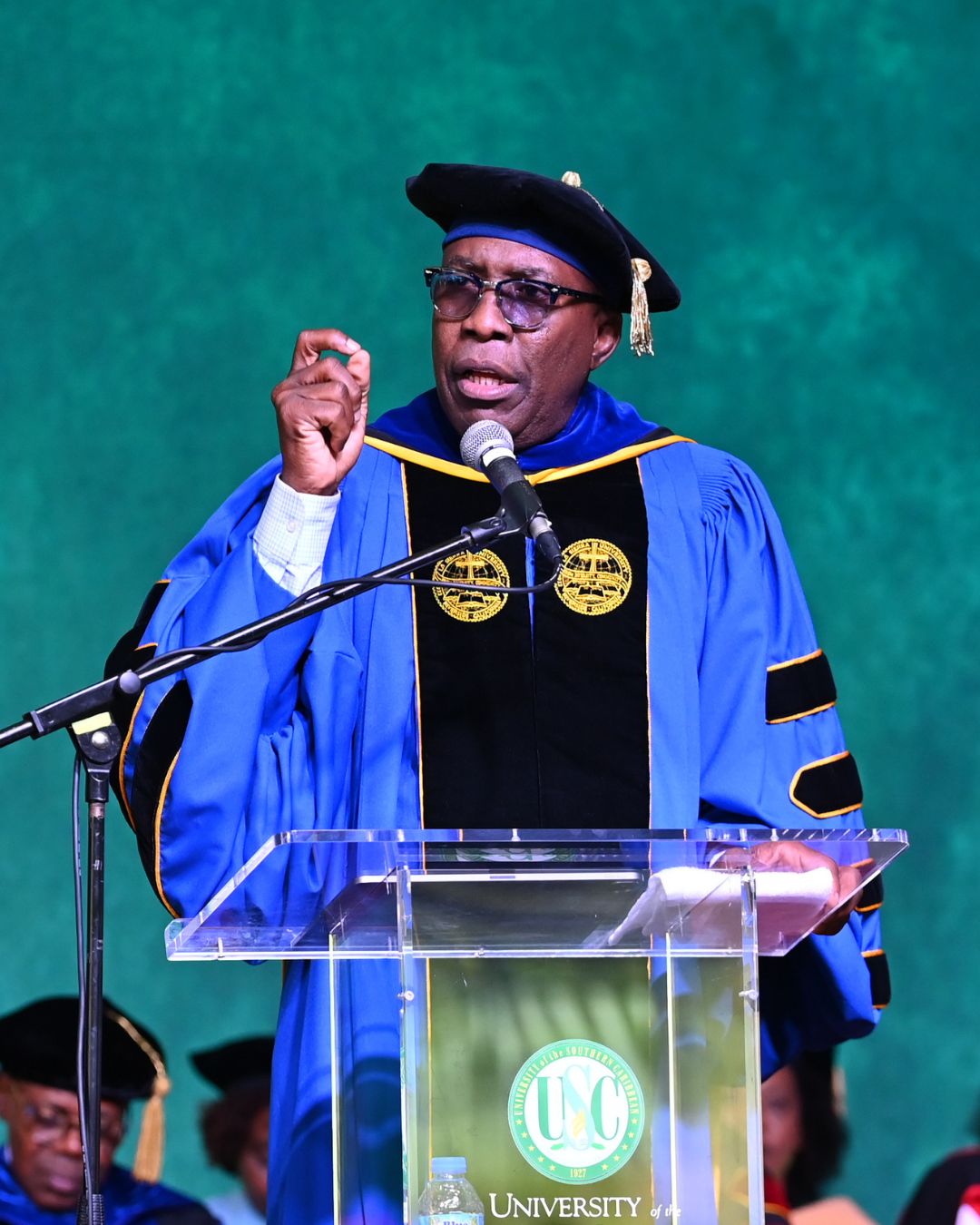
When Dr. Christon Arthur, President of La Sierra University and a 1989 graduate of Caribbean Union College, addressed the graduating class during commencement exercises, he shifted the conversation from personal success to collective responsibility.
Arthur reminded graduates that their degrees did not belong solely to them. They belonged to the parents who sacrificed, the grandparents who prayed, the friends who encouraged, the communities that invested, and the institutions that nurtured them.
A university education, he argued, creates an obligation to serve, lead, and lift others; because to whom much is given, much is required.
Drawing from the biblical responses of Abraham, Moses, and Isaiah, Arthur returned repeatedly to a single Hebrew word: Hineni—”I am available.” Not ready. Not fully prepared. Not possessing every answer. Available.
For Arthur, that distinction matters. Too often, graduates postpone service while waiting for perfect conditions, greater confidence, or additional credentials. Yet throughout Scripture, God rarely calls people after they have everything figured out. He calls them while they are still learning, growing, and becoming. Availability, he argued, is often the first step toward purpose.
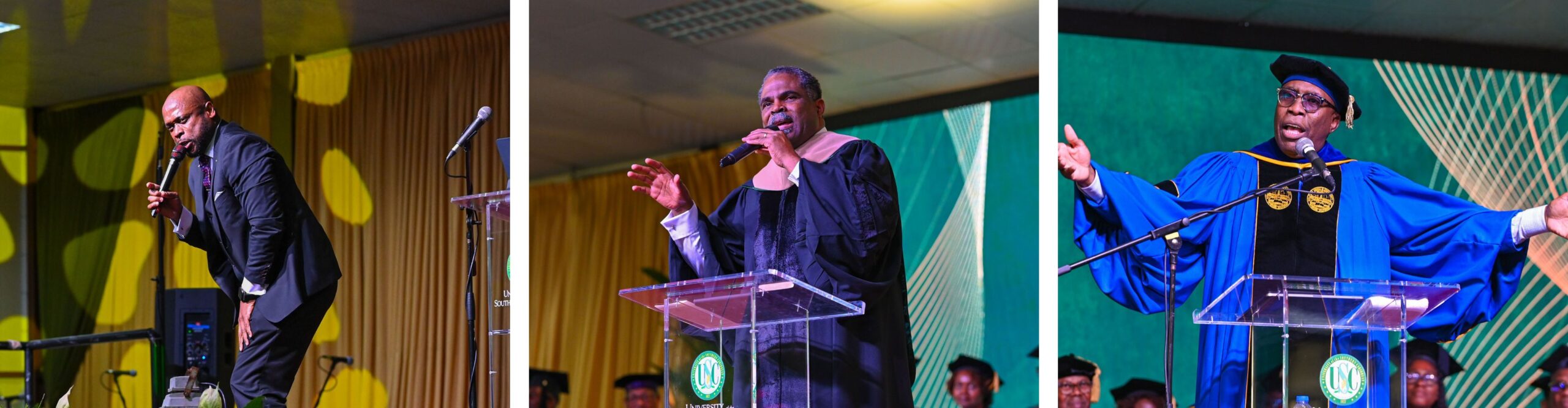
Taken together, the three messages formed a powerful progression: trust God when challenges arise, follow God when the future feels uncertain, and make yourself available when God calls.
The Class of 2026 arrived at commencement under the theme Anchored in God, Advancing in Excellence. By the weekend’s end, those words had acquired deeper meaning.
Excellence, the speakers suggested, is not merely academic distinction. It is not a résumé, a title, or a collection of accomplishments. It is a life shaped by faith, strengthened through adversity, guided by purpose, and committed to service.
As USC graduates stepped beyond the auditorium and into the next chapter of their lives, they carried more than degrees. They carried a calling.
And in the words echoed throughout commencement weekend, perhaps the most fitting response remains the simplest one: “I am available.”