
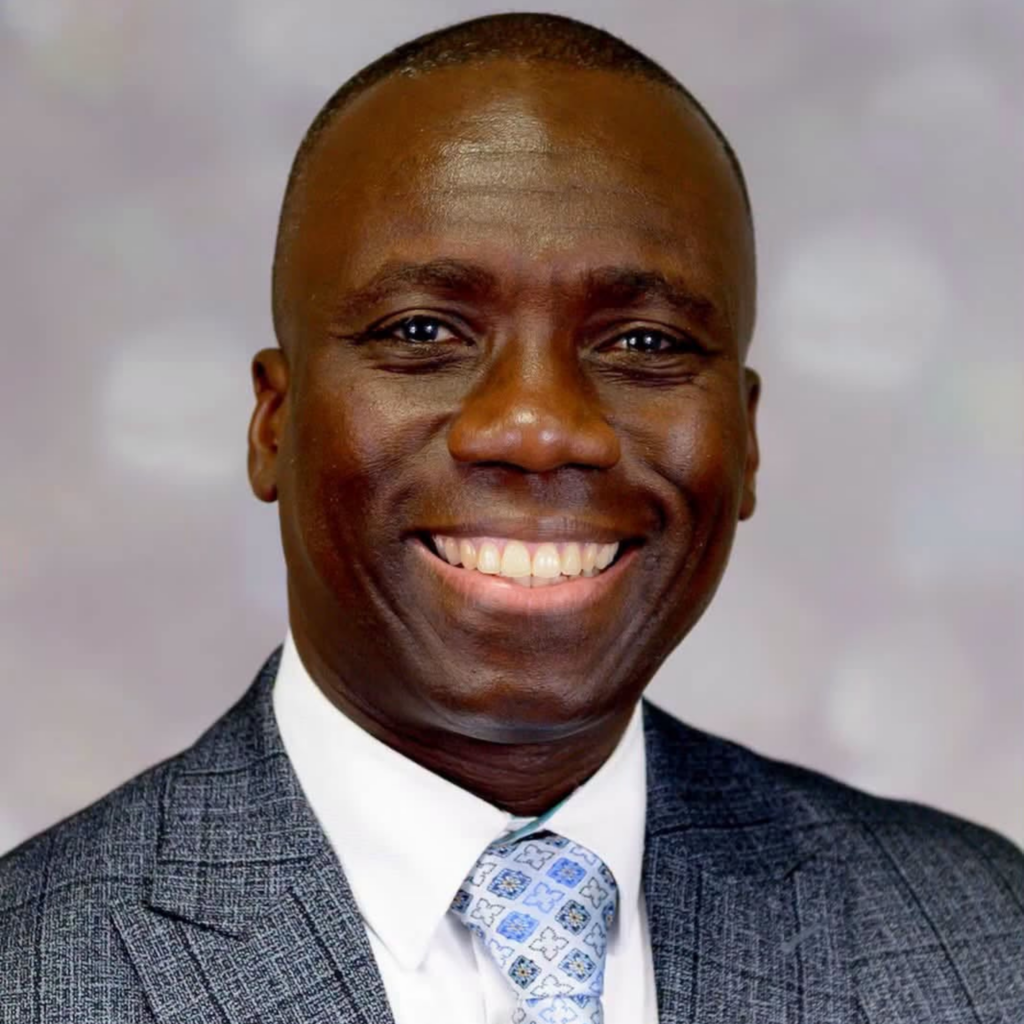
When delegates to the British Union Conference’s (BUC) tenth quinquennial session elected Dr. Kirk Thomas as president on July 2, 2026, they entrusted to him one of the Seventh-day Adventist Church’s most complex mission fields, stretching across England, Scotland, Wales, Northern Ireland, and the Republic of Ireland—a landscape of countless languages, traditions, and communities that demands not only administrative skill but exceptional pastoral sensitivity.
To many observers, the election represented the natural progression of a ministry spanning more than three decades. Dr. Thomas himself saw it differently.
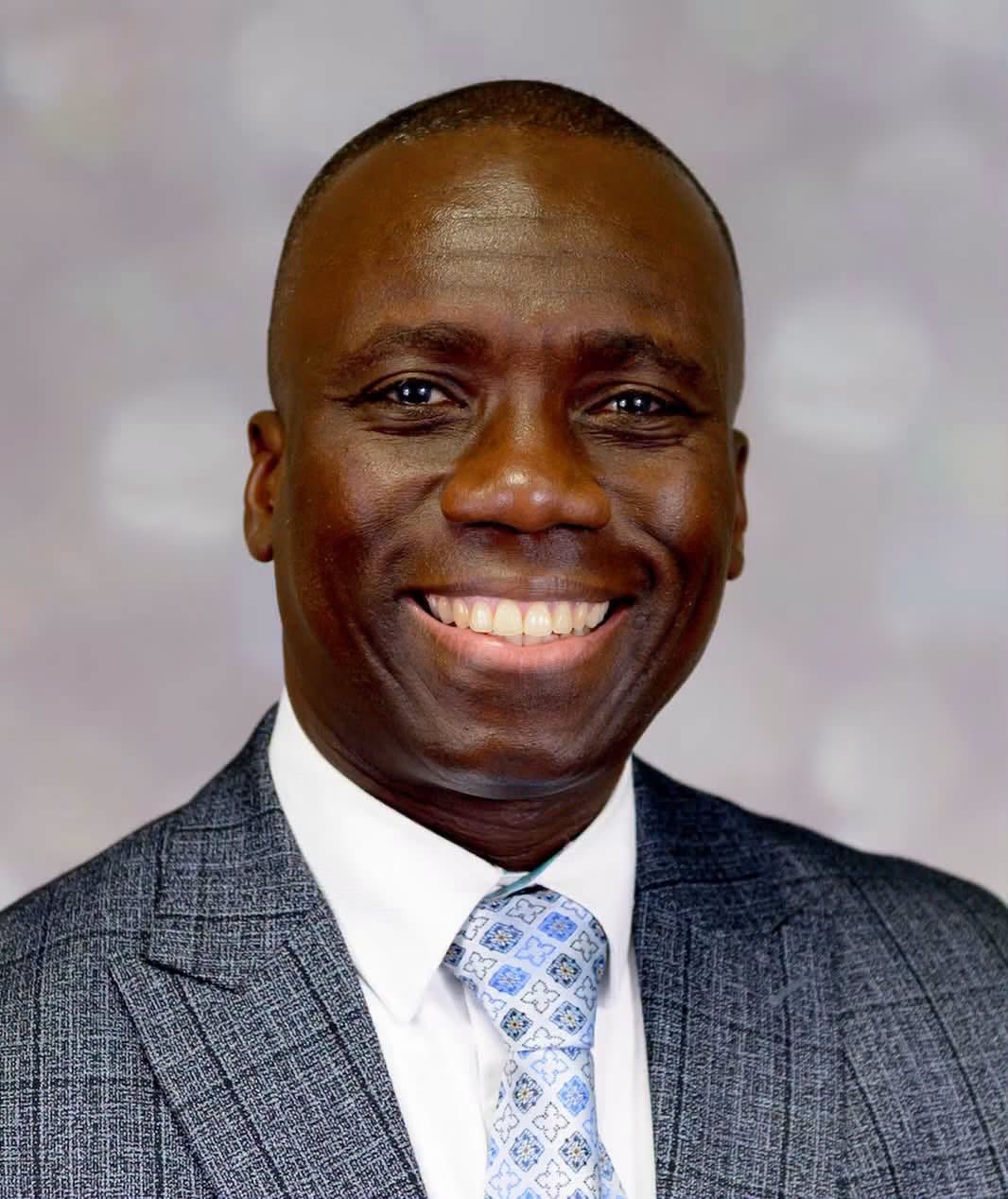
His first thoughts were not about the significance of the office or the honour of the appointment. Instead, he found himself wrestling with the enormity of the responsibility that now rested on his shoulders. Having just completed an impactful season of leadership as president of the South England Conference, he suddenly found himself asking a far more searching question: How can I make a difference for God’s mission on an even larger stage?
That instinct has become the defining characteristic of his leadership. Titles have never impressed him as much as opportunities to serve. It explains why, during his acceptance remarks, he gently challenged the common tendency to view ecclesiastical appointments as promotions.
“These positions,” he says, “are not promotions. They are greater acts of service to humanity.”
It is a philosophy that was formed decades earlier through hardship, refined by faith, and, perhaps most significantly, nurtured during his years as a theology student at Caribbean Union College.
A Young Man Arrives with a Suitcase, and a Prayer
When Kirk Thomas arrived on the Maracas Valley campus in 1990, he arrived carrying the weight of uncertainty.
Growing up in Guyana, he had been raised by a single mother whose faith often exceeded the family’s financial resources. He walked nearly twelve miles each day to attend school, frequently choosing to save transportation money so it could instead help purchase uniforms or meet household needs. His mother prepared meals before sunrise, and although their own cupboards were never full, she was remarkably generous with neighbours who had even less.
“I used to tell her, ‘Mom, we need this rice,'” he recalls. “And she would simply say, ‘Don’t worry. God will bless you.'” Those words became the quiet refrain of his childhood.
When he eventually sensed God’s unmistakable call to ministry, accepting that call meant leaving behind a promising career in public service and stepping into an uncertain future. Friends helped him purchase a seven-day airline ticket to Trinidad. However, immigration regulations required students to possess a one-year return ticket before entering the country.
Standing before the immigration officer, Dr. Thomas admitted that he had neither the required ticket nor the money to purchase one.
The officer studied the young man’s passport for a moment before quietly stamping it. “I wish you all the best.” Dr. Thomas still regards that moment as the first of many quiet miracles that carried him through his university years.
Registration day brought another obstacle. After completing his academic advising, he eventually joined the queue outside the Business Office, where students finalized their financial arrangements. Halfway through the line, he quietly left and joined the back again, hoping somehow to delay the inevitable conversation.
Eventually he reached the desk, where the cashier asked the routine question. “Will you be paying by cash, cheque, or credit card?”
He answered with remarkable composure. “I won’t be paying today because I have no money. I want you to register me for sixteen credit hours, give me a room in the dormitory, feed me in the cafeteria, give me as much work as you can, and I’ll work to pay you.”
The staff burst into laughter.
Looking back, Dr. Thomas smiles at the memory, but in that moment he was praying silently. “I wanted them to laugh,” he says. “Because I knew that while they were laughing, God would be speaking to somebody’s heart.”
When the laughter subsided, one administrator looked at his colleagues and quietly said, “Let’s register him.” With that simple act of faith, Caribbean Union College became the place where Kirk Thomas would earn a degree, and experience in tangible ways, the providence of God expressed through ordinary people.
The Education That Happened Beyond the Classroom
Like countless alumni, Dr. Thomas remembers lectures and assignments, but when he reflects on his years at CUC, his mind returns first to people.
He remembers the Friday evening worship services held on the Slab, where students from every corner of the Caribbean gathered to welcome the Sabbath together. He remembers Thursday nights filled with games, laughter, and fellowship. He remembers country clubs introducing students to each other’s music, traditions, and food, creating friendships that effortlessly crossed national and cultural boundaries. He smiles as he recalls Sunday lunches prepared by different island clubs, where students sampled the flavours of territories they had never visited, discovering that culture could be celebrated around a shared table.
Coming from Guyana, a nation already rich in ethnic diversity, he had grown up surrounded by different cultures. Yet he admits that it was not until he arrived at CUC that he truly appreciated what multicultural community looked like when people intentionally chose to live, worship, study, and serve together.
“You find yourself as part of a tapestry,” Dr. Thomas says. “You discover that we are different, but we are still one.” Today, that lesson shapes every aspect of his ministry.
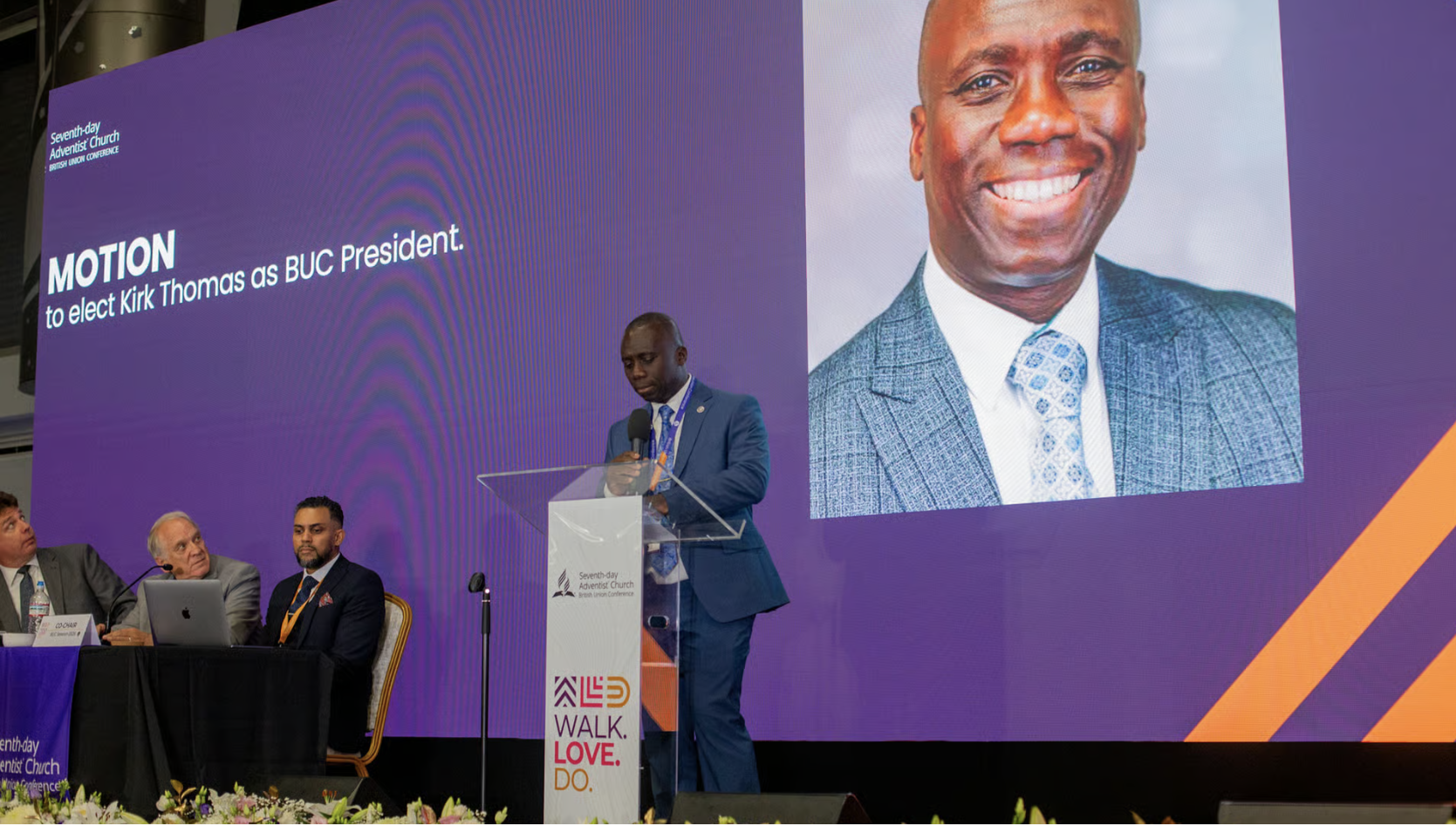 Dr Kirk Thomas addresses the delegation following his election as President during the British Union Conference session.
As BUC president, he now serves a constituency representing one of the most culturally diverse regions in the worldwide Adventist Church. Every Sabbath may find him preaching to a different audience, each with distinct expectations, traditions, and ways of engaging the gospel. Leading such a territory, he explains, requires emotional intelligence, cultural intelligence, and the humility to understand that ministry must always serve people where they are rather than expecting everyone to be the same.
Looking back, he recognises that Caribbean Union College was quietly preparing him for that responsibility long before he ever imagined serving in Europe.
Professors Who Taught More Than Theology
The classroom itself left an equally enduring imprint, not merely because of what Dr. Thomas learned academically, but because of the character of the people who taught him.
Pastor Ronald Daniel, then campus pastor, embodied compassion. Students knew him as someone who always had time to listen, who noticed when someone was struggling, who shared generously from his own garden, and who treated every student with dignity. Thomas speaks of him with profound affection, describing him as one of the finest Christians he has ever known. From Pastor Daniel, he says, he learned what it truly means to shepherd people.
Dr. Roy McGarrell taught a different but equally important lesson. Busy balancing classes with demanding campus jobs, Dr. Thomas once attempted to complete a book review by reading only the introduction and conclusion of the assigned text. When the assignment was returned, Dr. McGarrell had written a brief note that he has never forgotten, “Kirk,” it read, “next time, please read the book—not the preface.” Gracious correction delivered with kindness.
Dr. Thomas laughs heartily whenever he tells the story, but beneath the humour lies genuine gratitude. “I never did that again,” he says. Excellence, he learned, was not something demanded through intimidation. It was cultivated through patient mentorship.
The McGarrell family also opened their home to students, inviting them to meals, welcoming them into family life, and modelling a hospitality that he would later seek to replicate throughout his own ministry.
A Community That Formed a Pastor
Some of Dr. Thomas’ most valuable education happened away from lecture halls altogether.
Churches across Trinidad eagerly welcomed theology students into their congregations, often competing over who would host them for Sabbath lunch. Families quietly ensured that students far from home never lacked a place at the table, particularly during holidays when international travel remained financially impossible.
Faculty and staff adopted students as though they were members of their own families. “It taught us community,” he says simply.
The practical ministry opportunities proved just as formative. Evangelistic campaigns, student preaching appointments, Blitz programmes, and outreach initiatives allowed theology students to practise ministry while being trusted to serve.
Those experiences instilled a conviction that has remained central throughout his ministry: leadership is not first about authority but about presence.
Carrying CUC into Every Assignment
Dr. Thomas returned to Guyana after graduation in 1994. The churches that had prayed for him and sacrificed to support his education deserved his service first, he believed, and he has carried that same spirit through every subsequent appointment—from district pastor to departmental leadership, conference administration, the presidency of the South England Conference, and now leadership of the British Union Conference.
When asked what concerns him most about the future of ministry, his answer reflects the values formed during those years on the Maracas Valley campus. He worries that leadership can become preoccupied with position rather than purpose, with influence rather than sacrifice, and with administration rather than genuine pastoral care.
The antidote, he believes, is a return to authentic servant leadership. It is, in many ways, the very leadership he witnessed as a student.
A Legacy of Greater Service
Near the close of the conversation, Dr. Thomas was asked how he hopes people will remember him when his years of ministry have ended.
He did not mention becoming president of the British Union Conference, administrative achievements or organisational milestones. Instead, he spoke about faithfulness.
He hopes people remember that he remained true to God, that he loved and cared for his family, that he invested deeply in mentoring younger leaders, and that he faithfully preached Jesus Christ.
It is a remarkably simple aspiration for someone who now leads one of the Church’s most influential unions. Yet perhaps that simplicity explains his journey.
Long before Dr. Kirk Thomas became President of the British Union Conference, he was a young theology student standing in the Business Office at Caribbean Union College with no certainty about how the future would unfold. What he did have was faith, an extraordinary community willing to believe in him, and an institution that shaped not only his education but his understanding of leadership itself.
Years later, as he now serves thousands across the British Isles, the lessons of Caribbean Union College continue to travel with him; quiet reminders that the greatest leaders are rarely those who seek promotion, but those who never stop serving.