
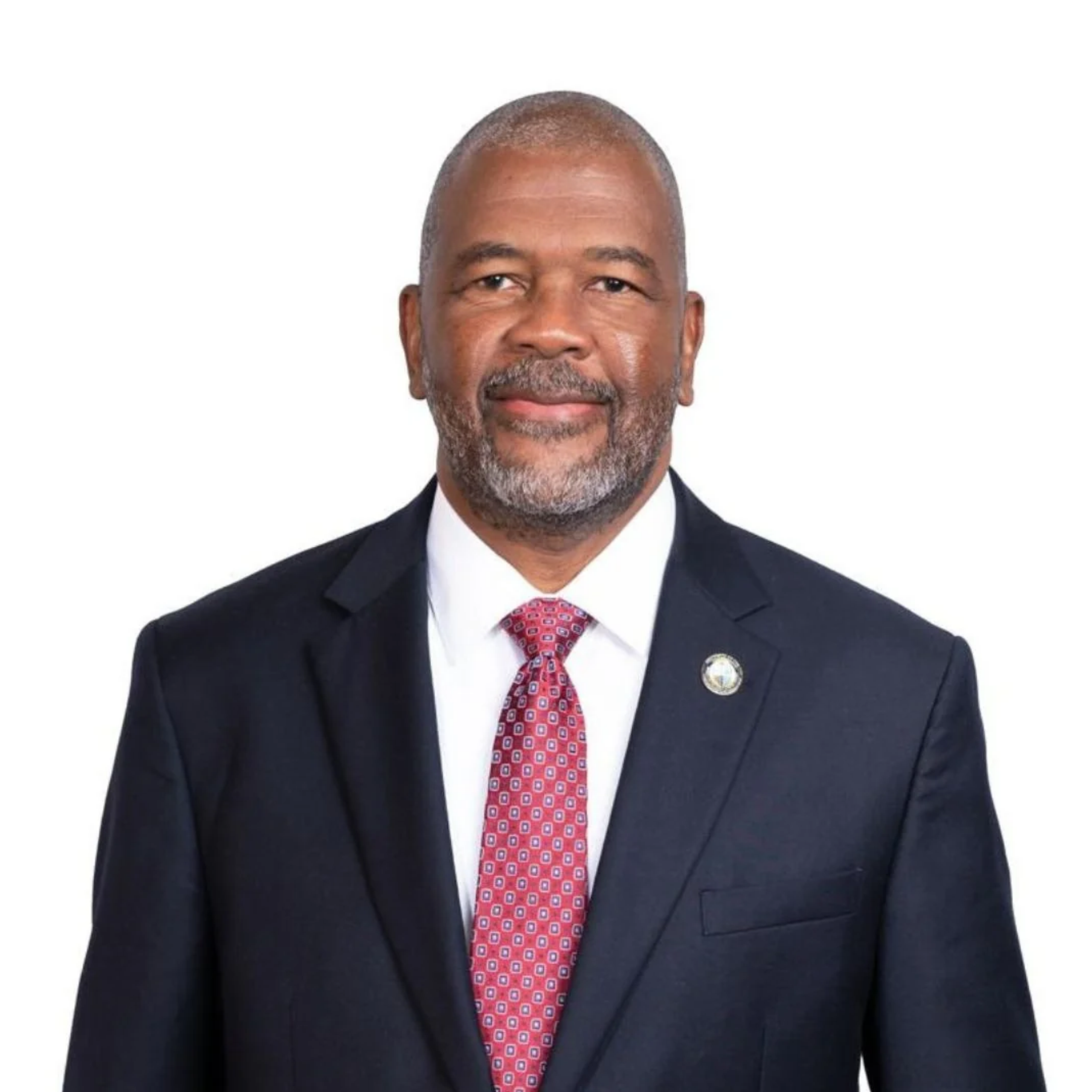
Name: Dr. Haldane Davies
USC qualification: Bachelor of Theology, 1980
Graduate education: Master’s degree in Education; PhD from Andrews University
Fields of service: Ministry, higher education, consultancy, institutional development and economic research
Current role: Director, Bureau of Economic Research, Office of the Governor of the United States Virgin Islands
Personal motto: Reaching worldwide to bring excellence home
Dr. Haldane Davies has built a career across disciplines, institutions and territories. He has served as a pastor, educator, university administrator, consultant, university president and economic researcher. Yet when he considers the foundation beneath that varied journey, his thoughts return to Caribbean Union College.
Davies arrived at CUC in the late 1970s and graduated in 1980 with a Bachelor of Theology. The institution gave him more than preparation for pastoral ministry. It exposed him to people from across the Caribbean and the wider world, expanding his understanding of culture, relationships and service.
“My positions in different locations have all zeroed back to USC, where the foundation was laid,” he says.
That foundation rested on the development of the whole person—a philosophy Davies would carry into every stage of his professional life.
At CUC, Davies served as president of the Ministerial Association, helping to guide the development of fellow theology students. His education also extended into surrounding communities. Sabbath after Sabbath, he preached, participated in branch Sabbath schools and gained practical experience in ministry.
Those encounters broadened his view of service. Ministry was not confined to a pulpit, nor was leadership defined by a title. Both required an ability to understand people, respond to their needs and create opportunities for their growth.
Davies spent approximately 15 years in pastoral ministry, but his desire to widen his contribution led him back to the classroom. While serving actively, he completed a master’s degree in education over four summers. He later earned a PhD from Andrews University.
His doctoral studies opened new avenues for teaching, research and professional collaboration. He travelled and presented with his lead professor and taught fellow doctoral students. Each opportunity strengthened his ability to move between ministry, education and organisational leadership.
After completing the degree, Davies returned to USC, serving for approximately two years as an assistant to the President. He later held a community-college vice presidency in the Virgin Islands and established Orion Consultancy Services, which has operated for about three decades.
At the University of the Virgin Islands, he worked in institutional development, capacity-building and strategic planning before becoming Vice President for Business Development and Innovation. He later served as President of the University of the Commonwealth Caribbean in Jamaica.
The settings changed, but the work retained a common purpose: building institutions capable of improving people’s lives.
Davies now serves as Director of the Bureau of Economic Research in the Office of the Governor of the United States Virgin Islands. The Bureau produces information used by the Governor, legislators, departmental leaders and agency heads to make decisions affecting the territory. Its work also helps inform discussions in Washington, D.C.
The role demands technical accuracy, careful preparation and intellectual honesty. Economic data may appear abstract, but the policies shaped by that data influence communities, livelihoods and opportunities.
Davies approaches that responsibility with the habits of a researcher and the convictions of a minister.
“My greatest business strategy above all is prayer,” he says.
He conducts the research, studies the evidence and prepares extensively. Then he asks God for direction. When he appears before the legislature, he seeks to speak with humility but also with confidence in the work and the guidance behind it.
His faith is not separate from his professional competence. It determines how that competence is exercised.
USC’s philosophy of developing the head, heart and hand has remained visible throughout Davies’ journey.
The head is reflected in his lifelong pursuit of knowledge and his commitment to research that is accurate and honest. The hand is found in the practical application of his abilities. That dimension began early: his father was a contractor, and Davies learned the fundamentals of construction and building alongside his academic preparation.
The heart governs how knowledge and skill are used.
“As we interact with others, it is important for us to be an example—to represent the life of Christ,” he says.
For Davies, excellence cannot be measured solely through professional advancement, economic growth or physical development. It must account for people. Leadership should create hope, open opportunities and contribute to the fuller development of those it reaches.
“We are here to serve,” he says, “and by serving, our lives are also impacted.”
That understanding has taken Davies beyond his formal employment. He has served on several professional and institutional boards, contributing to work in economic development, public management, institutional performance and education. His personal motto—Reaching worldwide to bring excellence home—captures his belief that experience gained in one setting should be used to strengthen another.
As USC approaches its Centennial, Davies hopes future USCians will see in earlier generations evidence that they, too, can make a difference.
Today’s students are preparing for a world shaped by artificial intelligence, social media and rapid technological change. Davies encourages them to embrace new opportunities while remaining grounded in the enduring principles of head, heart and hand.
Their fields may differ from his. Some will enter professions that did not exist when he studied at CUC. What should remain constant is their commitment to faith, excellence and service.
His advice is straightforward: develop a vision, write it down and translate it into small, deliberate daily steps. Stay focused. Allow God to lead.
Davies’ own journey demonstrates the cumulative power of those steps. Nearly five decades after entering CUC as a theology student, he continues to use the foundation he received there to strengthen institutions and inform decisions affecting communities.
That, for him, is the responsibility of legacy: to carry forward what one has received, apply it to the needs of the present and leave behind a stronger foundation for those who will follow.