
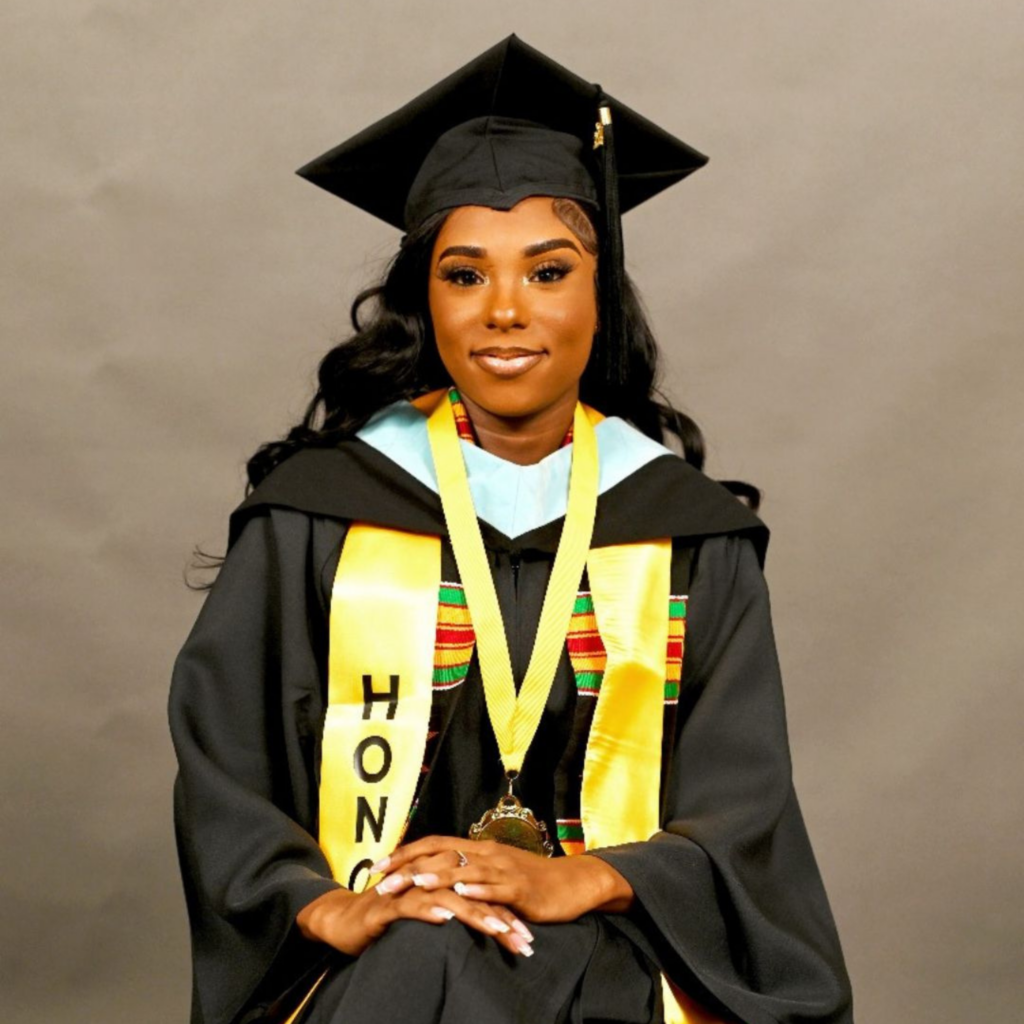
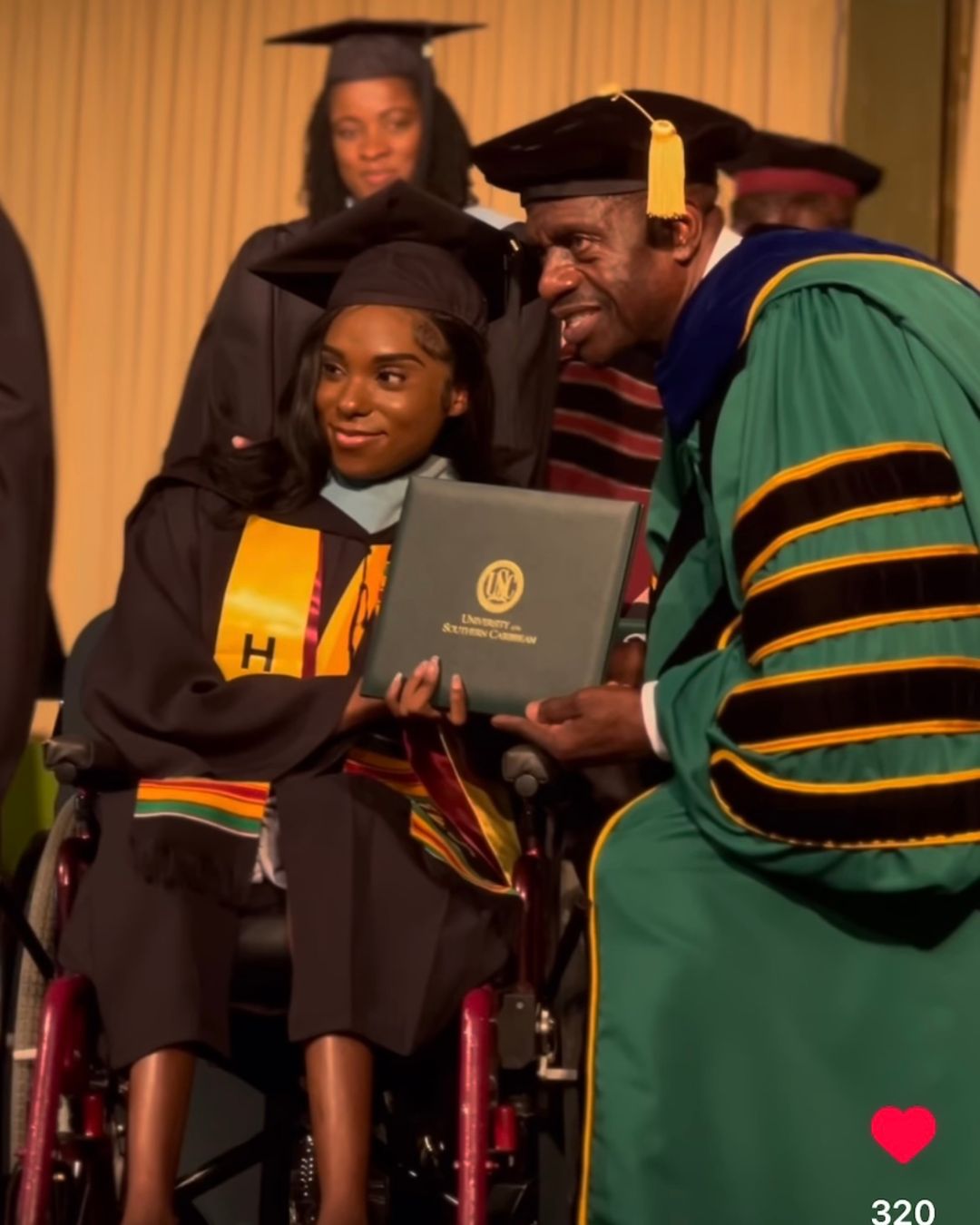
As Gabrielle McKenzie wheeled onto the commencement stage at the University of the Southern Caribbean in 2024, something unexpected happened.
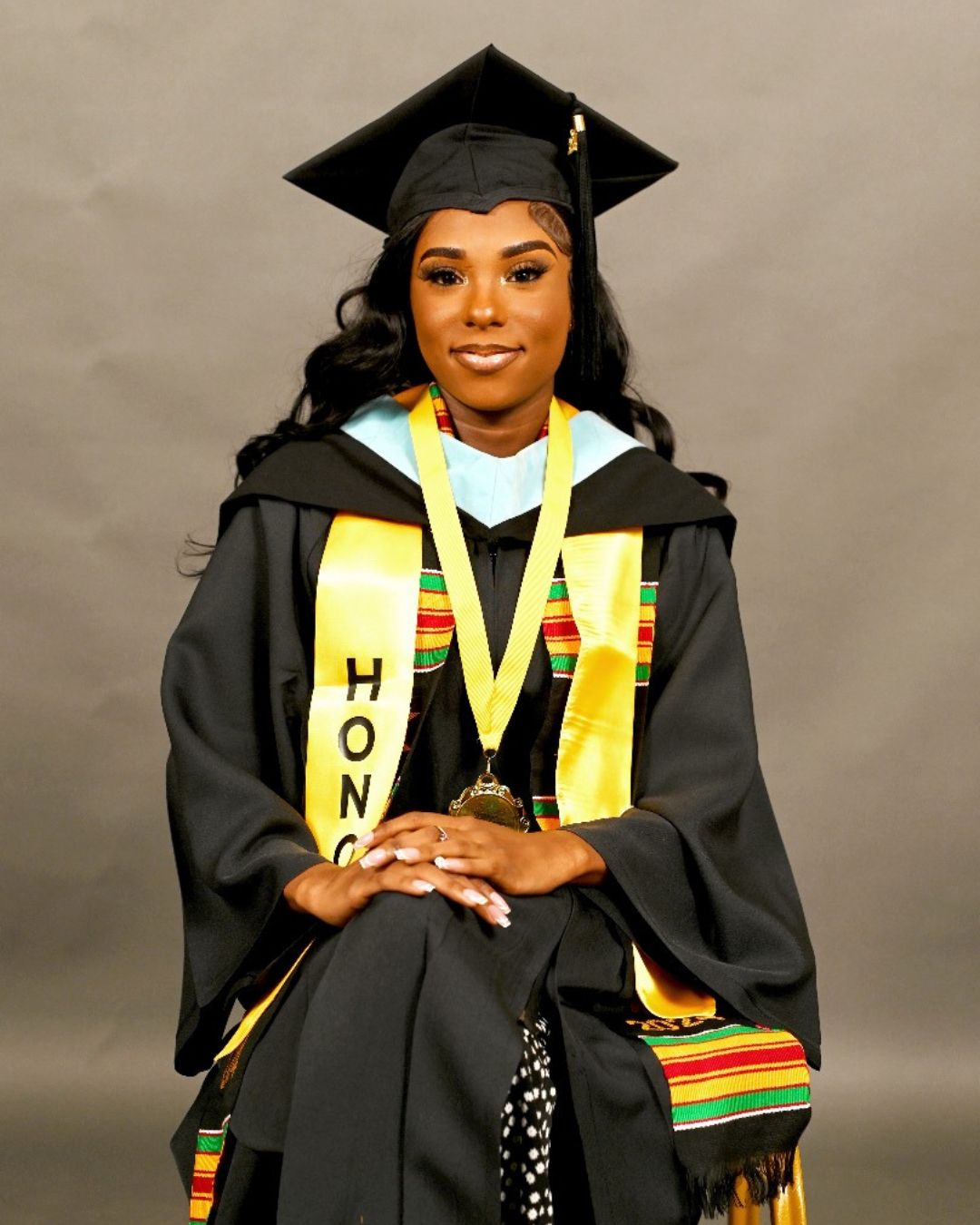 The applause that greeted her began with a few voices before swelling into a standing ovation. Graduates paused. Faculty rose. Families joined in. For a brief moment, the conferral of degrees gave way to something larger—a collective recognition of a journey few in the auditorium fully knew.
Her parents and sister had travelled from Guyana expecting to celebrate Gabrielle’s achievement as a family. They never imagined an entire auditorium would celebrate alongside them.
For Gabrielle, however, the standing ovation was about representation. “I wanted people to see that someone in a wheelchair can earn a university degree,” she says. “Sometimes people say they’ve never had someone like us before. Well, someone has to be the first.” That conviction has quietly shaped every chapter of her life.
Growing up in Guyana, Gabrielle lived with severe scoliosis. The pronounced curve in her spine brought chronic pain, relentless bullying, and the constant awareness of being different from her peers. By the age of seventeen, she hoped surgery would finally give her the freedom she had long desired.
Instead, when she awoke from the operation, she could no longer move or feel anything below her chest. The surgery left her with an incomplete spinal cord injury, and life changed in an instant.
The following year, 2016, proved to be the most difficult. She had already begun studying Medical Rehabilitation and had every intention of returning to the programme once she recovered. Instead, she found herself confronting the painful reality that the future she had imagined no longer existed.
“There wasn’t a day I didn’t cry,” she recalls. “Everything had crashed. I kept asking myself, ‘What am I going to do now?'”
Rather than pretending those feelings did not exist, Gabrielle allowed herself to grieve. “I felt everything I needed to feel,” she says. “Then I accepted what was, and I figured out how to move from there.”
It is a philosophy that continues to guide her life. “I don’t think becoming a wheelchair user changed what I wanted,” she reflects.“It just changed how I had to get there.”
Ask Gabrielle where that perspective comes from, and she offers no elaborate explanation. Instead, she speaks simply of faith. “I tell God what I want. If it’s His will, He gives me the strength, the resources, and the right people. I don’t always know where the strength comes from. I just know He gives me what I need for that day.”
As she searched for a new direction, Gabrielle found herself returning to a dream she had carried since her teenage years. Long before surgery altered the course of her life, she had wanted to become a psychologist. A mentor had once mentioned USC’s Psychology programme, and years later the memory resurfaced at exactly the right time.
The Guyana Extension programme offered the flexibility she needed while continuing rehabilitation, and with the support of a scholarship, she enrolled.
One of the things she appreciated most about studying online was something many students take for granted. Anonymity.
She deliberately chose not to disclose that she was a wheelchair user to most of her lecturers or classmates. “For once,” she says, smiling, “I didn’t have to be the girl in the wheelchair.”
Behind a computer screen, she was simply Gabrielle—a psychology student participating in discussions, completing assignments, and building relationships without being immediately defined by her disability. The experience allowed her to assimilate rather than be “othered,” something she had rarely experienced growing up.
At the same time, USC became a place of healing. “There were days I’d log into class completely overwhelmed,” she recalls. “Then I’d open the learning platform and there would be a Bible verse waiting at the bottom of the page. Somehow it always seemed to be exactly what I needed.”
One course, in particular, changed the trajectory of her career. Health Psychology explored the relationship between physical illness, mental wellbeing, and rehabilitation, and Gabrielle immediately recognised herself in the curriculum. “I could place my entire story in that course,” she says. “I knew this was what I wanted to do.”
Her own experiences had prepared her to understand the emotional realities of chronic illness in ways textbooks alone never could.
Outside the classroom, Gabrielle was already transforming adversity into advocacy. Remembering how isolated she had felt as a teenager living with scoliosis, she established a support group for young women facing similar challenges. The conversations extended far beyond medical diagnoses, creating a community where girls could speak honestly about confidence, identity, relationships, clothing, and the emotional burden of feeling different. “I didn’t want anyone else’s story to become my story,” she says.
That same commitment to advocacy shaped her decision to travel from Guyana to Trinidad for graduation rather than receive her degree in absentia.
The University only learned shortly before commencement that one of its graduates would be crossing the stage in a wheelchair. Staff quickly adapted the backstage area ensuring a clear pathway to the accessibility ramp, rehearsed the route with Gabrielle, and ensured she could participate fully in the ceremony.
Looking back, she chuckles at how simple the accommodation was. “People think accessibility is difficult,” she says. “Most times it’s just making small adjustments so someone else can participate.” Those small adjustments made possible one of the ceremony’s most memorable moments.
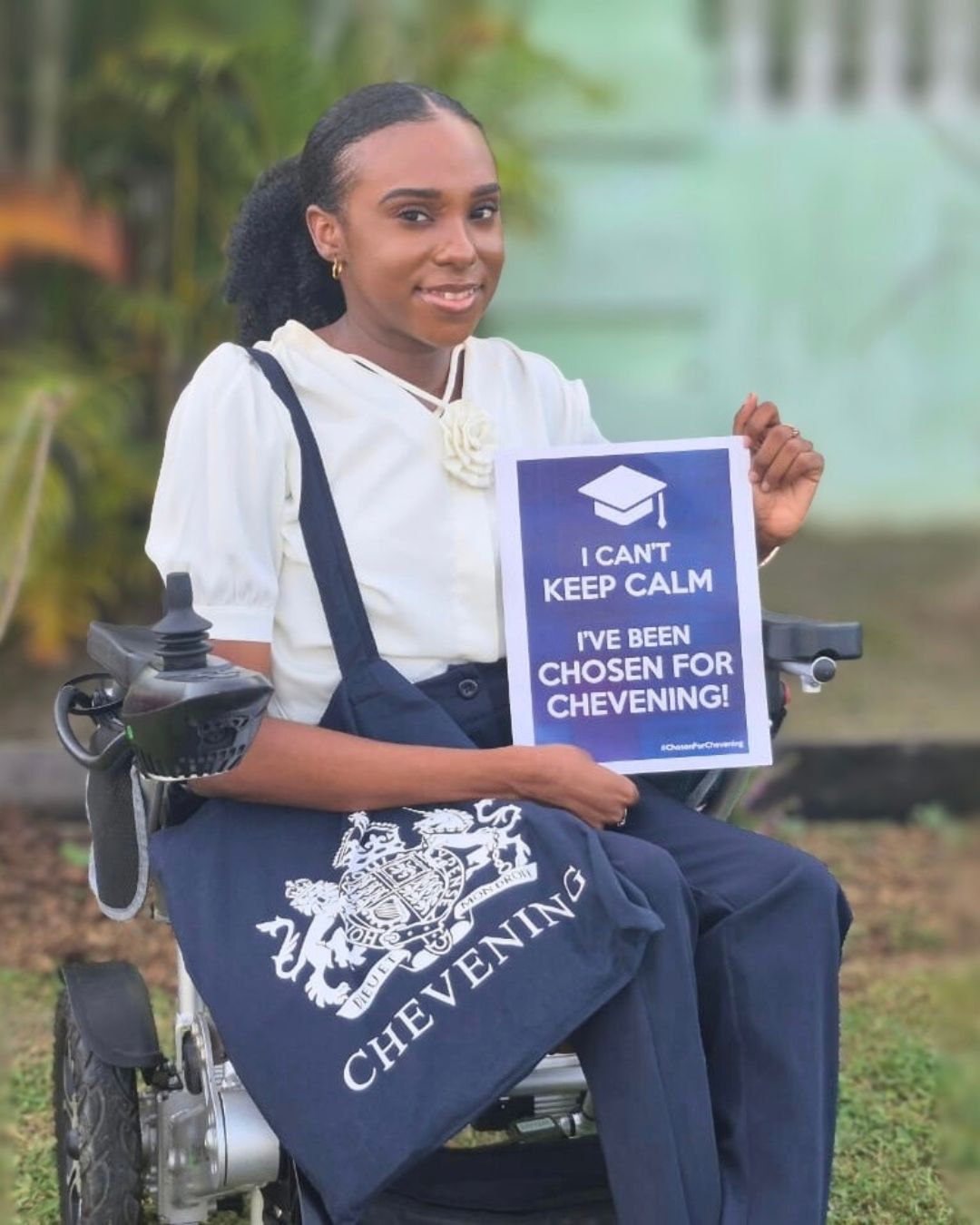
Today, Gabrielle is writing the next chapter of her story as a Chevening Scholar pursuing a Master of Science in Health Psychology at King’s College London. Yet some of her greatest lessons have come not from lectures, but from everyday life.
For the first time, she lives independently in fully accessible accommodation. She cooks her own meals, travels confidently across London, boards buses without assistance, and enters cafés, shops, and classrooms intentionally designed with people like her in mind.
One afternoon, she approached a small coffee shop, noticed a slight step at the entrance, and instinctively assumed she would have to leave. An employee noticed her hesitation and simply directed her to an accessible entrance around the side.
“I realised they had already thought about me,” Gabrielle says. “I wasn’t asking for special treatment. I was expected.”
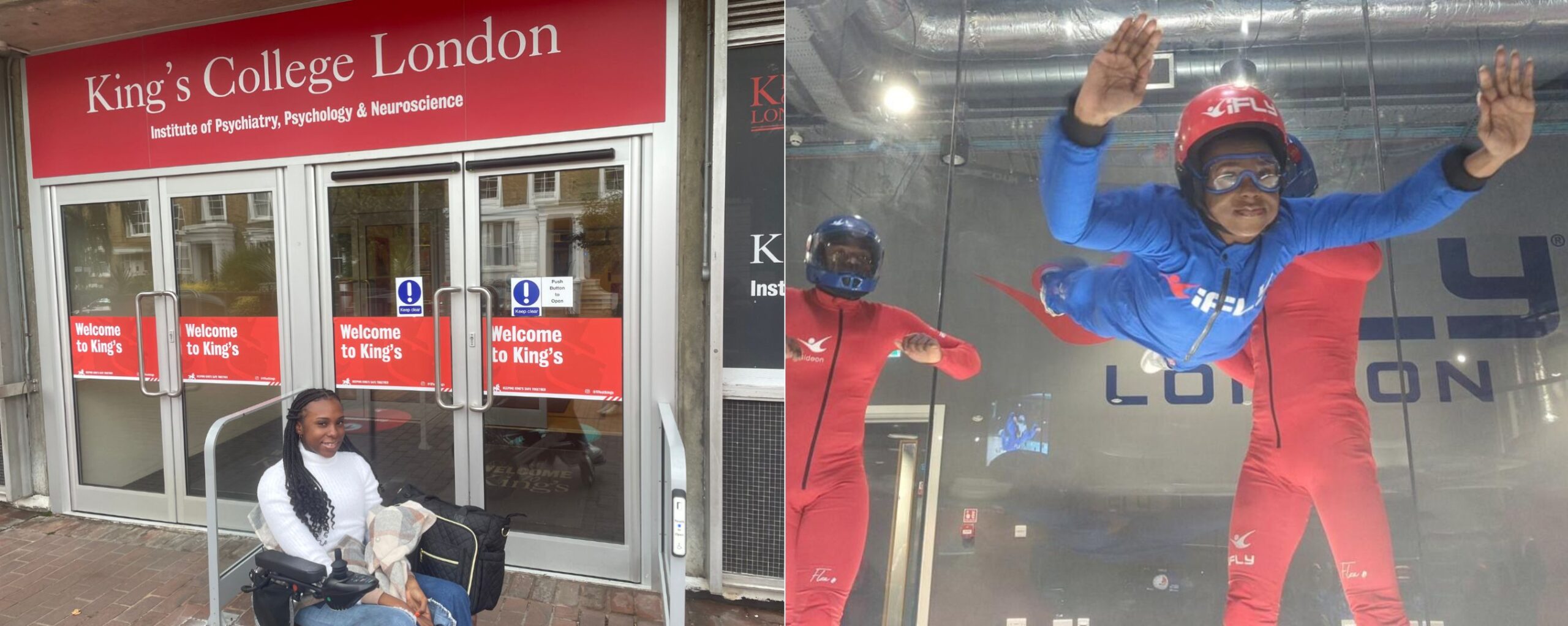
That moment fundamentally changed her understanding of gratitude. “People here take accessibility for granted,” she reflects. “For me, it’s extraordinary.”
Living in the United Kingdom has also expanded her vision for what is possible, not only for herself, but for others living with disabilities throughout the Caribbean.
When she returns to Guyana, Gabrielle hopes to work in health psychology, supporting people living with chronic illness while conducting research that strengthens disability policy and advocacy. She hopes to combine clinical practice with evidence-based research, believing meaningful inclusion requires not only compassion, but data that can shape better systems and better lives.
She also hopes to give back to USC, partnering with the University to advance conversations around accessibility, disability inclusion, and student support so that future students encounter fewer barriers than she did.
Asked what she hopes readers remember about her story, Gabrielle pauses before offering the two words that have become both her philosophy and her testimony.
“In spite of.”
In spite of the diagnosis, disappointment, uncertainty, every obstacle that sought to redefine her future.
Those words are more than a personal mantra. They are the quiet declaration of a young woman who refused to let circumstance determine possibility—a woman whose journey continues to remind others that while barriers may alter the path, they never have to decide the destination.