
Pastor Wayne Sampson challenged the University of the Southern Caribbean (USC) to examine the kind of people it is producing. Dr. Newton King turned his attention to those entrusted with leading it. Their concerns were distinct, but both raised questions that USC must confront as it approaches its 100th anniversary: What does faithfulness to its founding mission demand, and how should that commitment shape the University’s future?
Nearly two decades separate their graduating classes. Sampson, a 1992 graduate of Caribbean Union College, and King, a member of the Class of 1974, returned to their alma mater as featured speakers for Founders’ Weekend 2026. Drawing upon decades of pastoral ministry, both used the biblical account of Israel’s crossing of the Jordan River to examine the responsibilities that accompany a new chapter in the life of a faith-based institution.
“God is not just simply building a university. He’s building a people.”
For Pastor Wayne Sampson, Class of 1992, the University’s founding vision remains inseparable from the spiritual development of those who pass through its classrooms.
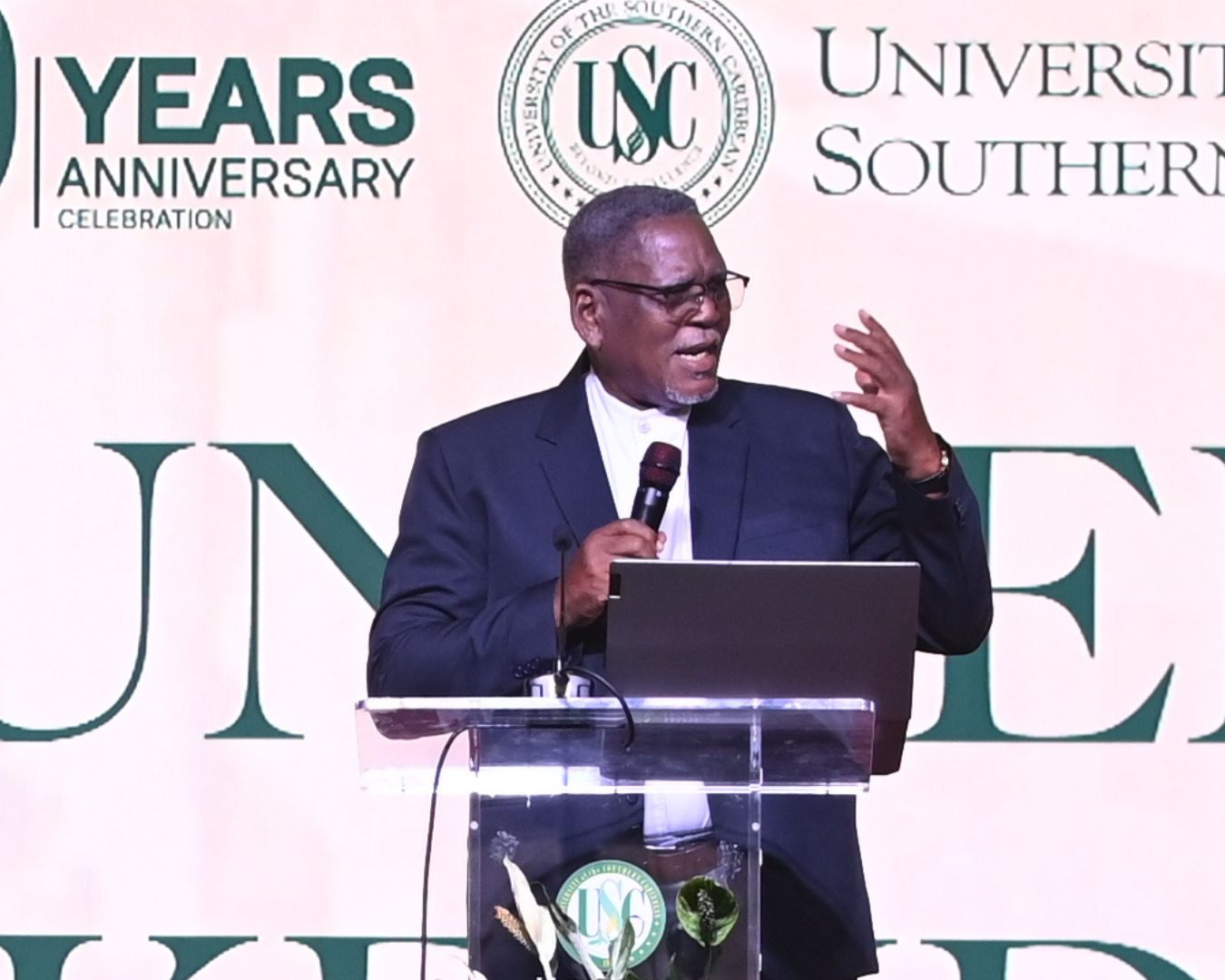
“Our founders saw more than just land. They saw a launching pad for eternity,” he told worshippers during Friday evening’s service, themed Gratitude for the Journey.
Ps. Sampson, whose ministerial career spans more than four decades, has served in pastoral leadership, evangelism and family ministries. Although retired from formal pastoral service, he continues his counselling and outreach work through Elpida-Topo: A Place of Hope.
His Founders’ Weekend message centred on 2 Corinthians 5:17: “If anyone is in Christ, he is a new creation.”
He examined what that transformation should mean in practice, identifying a new position in Christ, a changed character and the potential made possible through divine empowerment.
Of particular concern was the difference between outward religious conformity and genuine conversion. Christian education, he argued, must reach beyond the appearance of faith to influence the choices people make and the lives they lead.
For USC, the challenge was especially relevant. As academic programmes expand and the institution prepares for another century, Ps. Sampson urged its community to remain attentive to the purpose for which the school was established.
“Yesterday’s victory is not enough for tomorrow’s battle,” he cautioned.
Turning to Joshua 3, he recalled the Israelites’ instruction to follow the Ark of the Covenant towards the Jordan. Their progress depended upon obedience to God’s direction, even when the way forward appeared uncertain.
Ps. Sampson returned to the opening word of his principal scripture: if. The promise of becoming a new creation, he reminded listeners, calls for a personal response. Institutional history could provide inspiration, but each generation must decide how faithfully it will carry that inheritance forward.
“Your business is to have the Ark of God on your shoulders.”
For Dr. Newton King, Class of 1974, the biblical account of Israel’s journey to the Promised Land offered a lesson in the demands of Christian leadership.
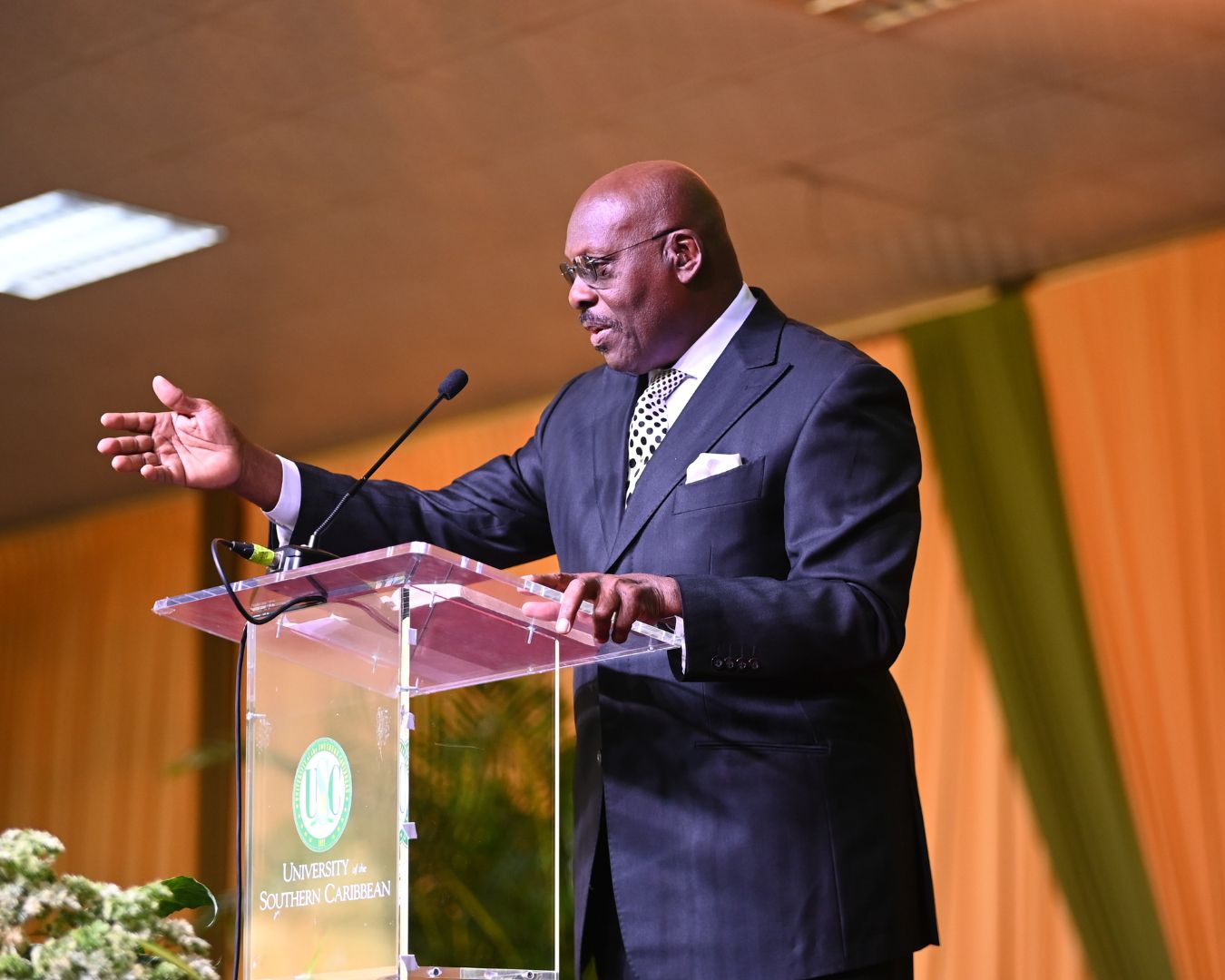
Dr. King’s career has included more than five decades of pastoral ministry and advanced studies in religion and clinical psychology. Since 2016, he has served as pastor of the University Seventh-day Adventist Church in Orlando, Florida.
During Saturday’s service, themed Approaching the Promise, Dr. King preached from Joshua 3, concentrating on the priests who carried the Ark of the Covenant as Israel approached the flooded Jordan River.
The people faced a crossing they could not accomplish by ordinary means. Their instructions were to follow the Ark, carried by priests who were themselves required to step forward in faith. Dr. King used the account to examine the responsibilities of those called to guide God’s people through uncertain circumstances.
Addressing USC President Dr. Colwick Wilson directly, he offered a pointed description of the responsibility entrusted to Christian leaders.
“Your business is not to be able to solve every problem and to know the answer to every question. Your business is to have the Ark of God on your shoulders.”
The Ark’s contents provided the framework for his message. The Ten Commandments represented God’s authority, Aaron’s budding rod recalled divine appointment, and the manna testified to God’s provision.
Dr. King also emphasised the personal accountability of those who lead. “I must live what I preach,” he declared, insisting that the credibility of spiritual leadership rests upon conduct consistent with professed beliefs.
He illustrated his confidence in divine provision through an ordinary incident involving his diesel vehicle. When a refuelling mechanism became stuck, the specialised tool needed to release it had arrived unexpectedly in a parcel delivered for his wife the previous day.
“The Lord sent it the day before I needed it,” King reflected.
The experience offered a practical illustration of the trust he urged USC’s leaders to cultivate. They would face circumstances for which their training and experience could not provide every answer. For Dr. King, the responsibility was to remain faithful to God’s direction and attentive to His provision.
Although Ps. Sampson and Dr. King drew upon the same biblical narrative, their messages addressed different dimensions of USC’s calling.
Ps. Sampson examined the transformation expected of those who profess faith in Christ, challenging listeners to consider whether their conduct reflected the University’s spiritual ideals. Dr. King concentrated on leadership, drawing attention to the humility and obedience required of those responsible for guiding the institution.
Both messages were delivered as USC entered the final year before its centennial, a period that will invite reflection on the University’s history and decisions about its future.
Their counsel offers a useful measure for those decisions. Academic growth, institutional development and the celebrations of 2027 will form part of USC’s continuing story. The question raised during Founders’ Weekend is how faithfully the University will carry its founding Christian mission into the century ahead.