
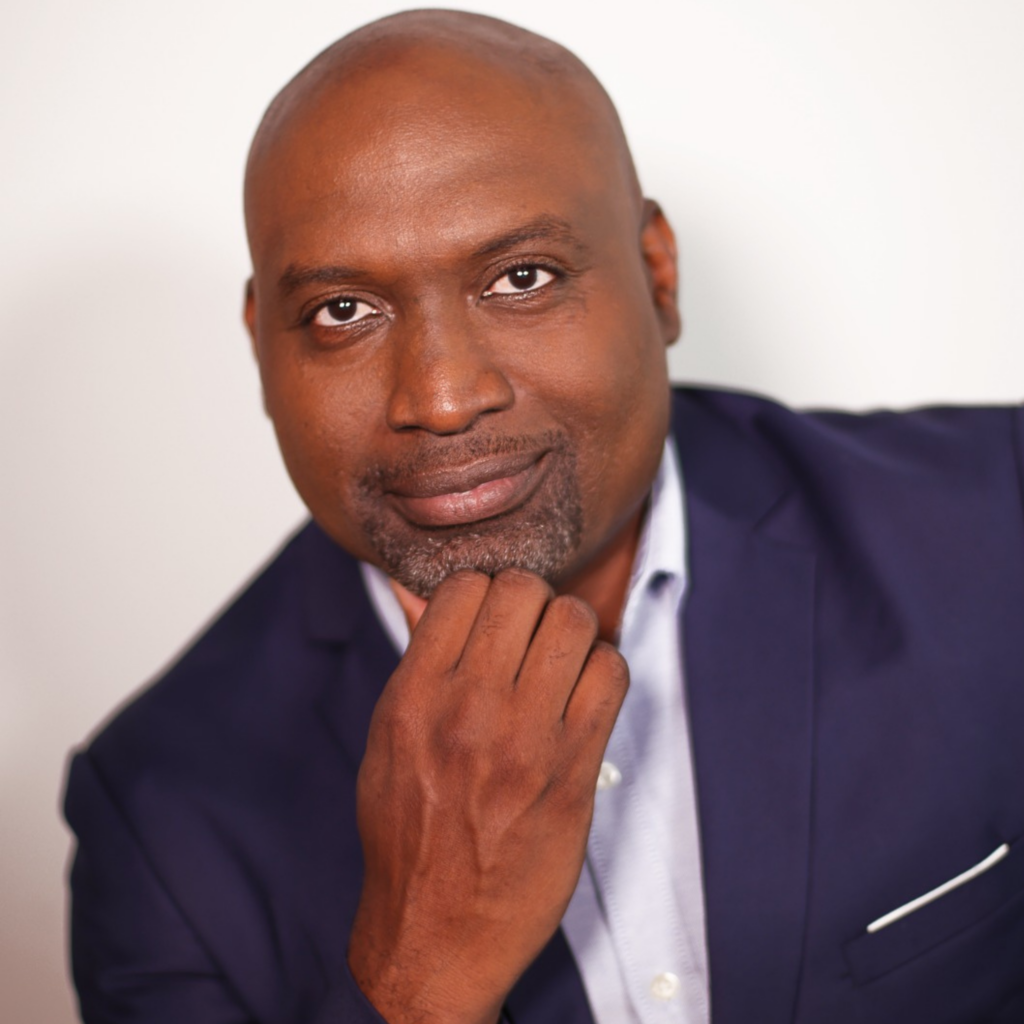
On most days, Dr. Carlos Todd sits across from couples in quiet rooms, listening not just to what is said, but to what is breaking beneath the surface. The arguments vary. The stories differ. But the patterns are familiar: miscommunication, unspoken hurt, the slow erosion of trust. For more than 25 years, Dr. Todd has stepped into these moments helping people untangle conflict, rebuild connection, and, in many cases, begin again.
Long before he became a nationally recognized expert in the United States in anger management and relationship restoration, Todd was a student trying to understand his own story.
He arrived at Caribbean Union College (CUC) in the late 1990s from Barbados, stepping into an environment that felt both structured and expansive. He was the first in his family to attend the institution though in many ways, it had already been chosen for him.
“I grew up Seventh-day Adventist,” he recalls. “CUC was always there, featured during education weekends, talked about in church. It wasn’t really a question of if. It was just where.” He enrolled in the Bachelor of Science in Behavioral Science programme, graduating in 1998. At the time, the decision felt deeply personal. “I wanted to understand myself,” he says. “That was really the starting point – self-discovery.”
Formed in Community, Shaped by Mentorship
Campus life was textured and communal; four young men sharing a room in Cedar Hall, friendships forged in close quarters, Fridays spent venturing into Port of Spain or Curepe, and the unspoken rhythms of student life that linger long after graduation.
“It was the friendships,” he says. “That’s what stayed with me.” Some of those connections have endured for decades, quiet reminders of a formative season that continues to echo through his life.
Beyond the friendships, there were voices of guidance that helped shape his thinking and maturity. Mentors like Dr. Carl Spencer offered not just academic direction, but also perspective. “I was pretty naïve back then,” Todd admits. “But I had good advisors. Good supervision. That mattered.”
From Counseling Room to Global Reach
If his time at CUC planted the seed, his career would become the field in which it grew. Today, based in Charlotte, North Carolina, Dr. Todd is a Licensed Clinical Mental Health Counselor, Certified Anger Management Specialist, and co-founder of Conflict Coaching and Consulting, Inc., a practice he has built alongside his wife, Natasha Pemberton-Todd, for over 15 years.
Since entering the field in 2000, he has worked with hundreds of couples navigating conflict, communication breakdowns, and the fragile process of healing after betrayal. His work is both clinical and deeply human, requiring not just expertise, but presence.
Innovation in a Changing Mental Health Landscape
In recent years, his reach has expanded beyond the therapy room. Through platforms like MasteringAnger.com and Couples Fight School, as well as his published works including The F.I.G.H.T. Plan and RESTORE, he has created tools that allow people to engage with their relationships in practical, transformative ways.
But for Dr. Todd, impact is not limited to one-on-one sessions. “Something that’s been important to me is innovation,” he says. “You don’t see yourself only as someone sitting behind a desk giving advice. That’s not your only role.” Instead, he encourages a broader vision, one that embraces creativity, reach, and relevance.
“Creating products and services, doing things outside of just face-to-face sessions – groups, podcasts, whatever it is,” he explains. “In the age of social media, there’s a lot greater leverage in carrying a message than just sitting in front of a client.”
It is a philosophy shaped by both experience and foresight. “In my early years, people were still trying to figure out what mental health even meant,” he reflects. “Now everyone is talking about it.” With that visibility comes both opportunity and complexity. The field is growing, but so is the need for clarity and distinction.
“For anyone entering mental health today, you have to define your niche early,” he advises. “It takes time to develop mastery, to become known for something.”
It is advice he offers candidly. “I didn’t go straight into a doctoral programme,” he says. “But I would encourage students now to think about that early. The field is changing. You have to position yourself.”
At the same time, he is clear about what cannot be replaced. “We’re entering a world of artificial intelligence,” he says. “But there are things AI still cannot do – reading body language, understanding nuance, being present in a human way. That will always matter.”
A Critical Space: Men and Mental Health
For Dr. Todd, one of the most urgent spaces of that human work lies in men’s mental health. “More women attempt suicide,” he notes, “but more men succeed.” The reasons are layered: access, methods, but also silence.
“Men hold on to things for too long,” he says. “And when it reaches a breaking point, it can feel like there’s no way out.”
It is why he believes male practitioners have a critical role to play, not just in treatment, but in early intervention, in teaching emotional regulation, and in reshaping how men engage with their inner lives. “There’s still not enough of us in the field,” he says. “And that means there’s still a lot of work to be done.”
Lessons for the Next Generation
When asked what he would say to students at the University of the Southern Caribbean today, particularly those preparing to graduate, his response is more about experience.
“Take your work seriously,” he says. “But enjoy where you are. Travel. Explore. Learn the culture you’re in. It shapes you.” It is a quiet reflection, but also a gentle instruction. And then, perhaps most importantly: “Build strong friendships. Those relationships will carry you through decades.”
Nearly thirty years after leaving campus, Dr. Todd’s life stands as a reminder that the journey from self-discovery to service is rarely linear, but always meaningful. And at the center of it all remains the same guiding principle that has shaped his work, his voice, and his impact: Helping people learn to fight less, and love more.